Imagine your knee is like a busy intersection with lots of moving parts. Sometimes, a car breaks down (a bone chips) or a traffic light stops working (a ligament tears). To fix it, you usually have to dig up the whole road, right?
Not anymore.
Knee arthroscopy is like sending a tiny drone with a camera into that intersection to see exactly what’s wrong and fix it—without digging up the whole street. It is a modern, simple way to check and cure knee problems.
At Arthroscopy College, we specialize in these advanced, “keyhole” surgeries that get you back on your feet faster. Whether you are an athlete or just want to walk without pain, this guide is for you.
What Exactly is Knee Arthroscopy?
Knee arthroscopy is a minimally invasive surgical procedure. “Minimally invasive” is a big word that just means the doctors make very tiny cuts—about the size of a buttonhole or a keyhole.
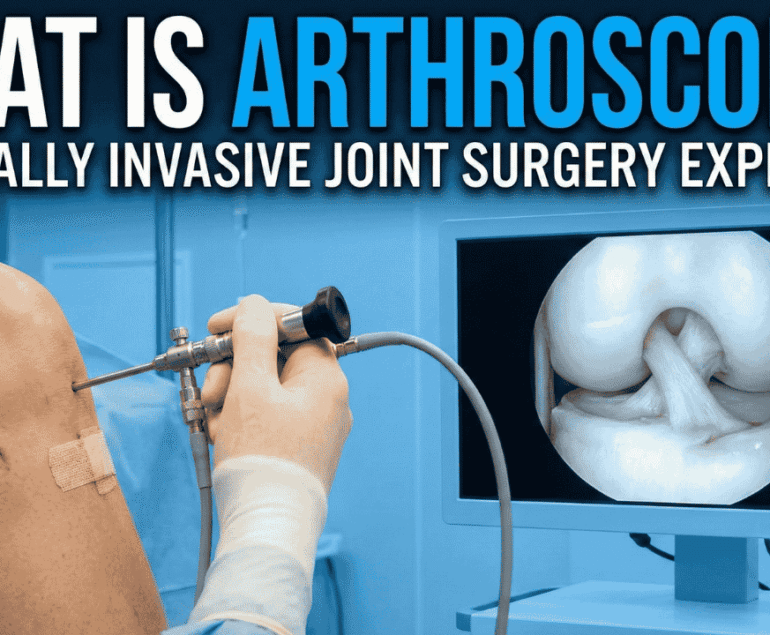
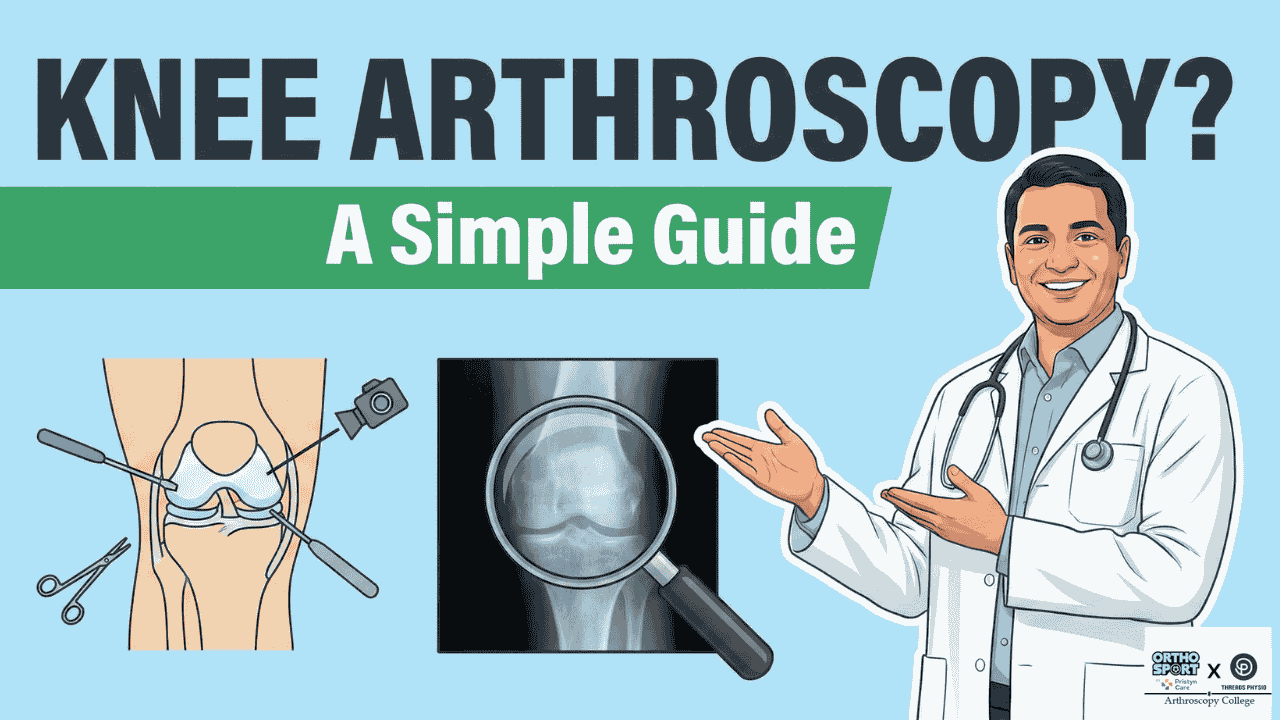
Through these tiny cuts, the doctor inserts a long, thin tool called an arthroscope. This tool has a tiny camera on the end.
- The Camera: It acts like a flashlight and a video camera combined. It goes inside your knee and shows the doctor a clear picture on a TV screen in the operating room.
- The Tools: If the doctor sees a problem (like a torn tissue), they can put tiny instruments through another small cut to fix it right then and there.
Because the cuts are so small, you don’t have big scars, and you heal much faster than with old-fashioned “open” surgery.
Did You Know? The word “Arthroscopy” comes from two Greek words: “arthro” (joint) and “skopein” (to look). It literally means “to look inside the joint.”
Why Do Doctors Perform This Surgery?
Doctors use knee arthroscopy for two main reasons: to diagnose (find out what’s wrong) and to treat (fix the problem).
Sometimes, X-rays or MRI scans don’t show everything. Arthroscopy gives the doctor a “live” look inside your knee to see cartilage, bones, and soft tissues clearly.
Common Conditions Treated
Your doctor might recommend this if you have knee pain that doesn’t go away with rest, ice, or medicine. Here are the most common problems fixed by knee arthroscopy:
- Torn Meniscus: The meniscus is a rubbery cushion in your knee. If it tears, doctors can trim or repair it.
- ACL or PCL Tears: These are the ligaments (ropes) that hold your knee stable. They are very common injuries in sports.
- Loose Fragments: Sometimes, small pieces of bone or cartilage break off and float inside the knee, causing it to lock up. The doctor can vacuum these out.
- Inflammation: The lining of the joint (synovium) can get swollen. Doctors can remove this inflamed tissue.
Kneecap Problems: If your kneecap (patella) is out of position, this surgery can help align it.
Anatomy of the Knee: What’s Inside?
To understand the surgery, it helps to know what the doctor is looking at. Your knee is the largest joint in your body. It is made up of:
- Bones: The thighbone (femur), shinbone (tibia), and kneecap (patella).
- Cartilage: A smooth, white coating on the bones that helps them glide easily.
- Meniscus: Two wedges of rubbery cartilage that act as shock absorbers between your bones.
- Ligaments: Strong ropes that hold your bones together. The most famous ones are the ACL (Anterior Cruciate Ligament) and MCL (Medial Collateral Ligament).
When you twist your knee playing sports like football or volleyball, you can damage these parts. That is where Arthroscopy College experts step in to help.
Getting Ready: Before the Surgery
Preparation is easy, but you must follow the rules to stay safe.
- Medical Checkup: Your doctor might ask for blood tests or an EKG (heart check) to make sure you are healthy enough for surgery.
- Medications: Tell your doctor about all the medicines you take. You might need to stop taking “blood thinners” (like aspirin or ibuprofen) a week before surgery so you don’t bleed too much.
- Fasting: Usually, you cannot eat or drink anything for 6 to 12 hours before the surgery. This keeps you safe while under anesthesia.
Need a Second Opinion? If you are unsure if you need surgery, talk to our experts. Chat on WhatsApp
The Procedure: What Happens During Surgery?
Most of the time, this is an outpatient procedure, meaning you go home the same day. The whole surgery usually takes less than an hour.
Step 1: Anesthesia
You won’t feel any pain. The doctor will give you medicine to numb the area. This could be:
- Local Anesthesia: Numbing just the knee (you stay awake).
- Regional Anesthesia: Numbing you from the waist down (you are awake but feel nothing).
- General Anesthesia: You go to sleep and wake up when it’s over.
Step 2: The Setup
The doctor cleans your leg and puts a special stabilizing device on your knee to keep it in the right position. They fill your knee with a sterile fluid (like saltwater) to expand it. This gives the camera plenty of room to see.
Step 3: The Incisions
The surgeon makes 2 or 3 tiny cuts (portals) around your knee.
- Through one cut, they insert the arthroscope (camera).
- Through the other cuts, they insert tiny scissors, shavers, or lasers to fix the problem.
Step 4: The Repair
Watching the TV screen, the surgeon repairs torn ligaments, shaves off damaged cartilage, or removes loose bone fragments.
Step 5: Closing Up
Once the job is done, the fluid is drained. The cuts are so small they often only need one stitch or a small bandage strip (steri-strip) to close them. Your knee is wrapped in a soft bandage.
Recovery: What Happens After?
Since the surgery is simple, recovery is usually fast. You will likely go home 1 or 2 hours after the surgery.
The First Few Days
- R.I.C.E Method:
- Rest: Stay off your feet.
- Ice: Use ice packs to reduce swelling.
- Compress: Keep the bandage on.
- Elevate: Keep your leg propped up on pillows above your heart level.
- Pain Management: Your doctor will give you medicine for pain. Take it exactly as directed.
- Crutches: You might need crutches for a few days to keep weight off your knee.
Rehabilitation (Physiotherapy)
This is the most important part! To get 100% results, you must do exercises to strengthen your leg muscles. At Arthroscopy College, we emphasize a strong rehab program.
- Early Days: Simple leg lifts and ankle pumps.
- Later Weeks: Cycling, swimming, and strengthening exercises.
You can usually drive a car again in 1 to 3 weeks. Most people return to full activities or sports in 6 to 8 weeks, depending on what was fixed.
Risks and Complications
Knee arthroscopy is very safe, but like any surgery, there are small risks. These are rare but can include:
- Infection at the cut site.
- Blood clots in the leg.
- Knee stiffness.
- Swelling or bruising.
Call your doctor immediately if you have a fever, severe pain that medicine doesn’t help, or bad swelling.
Why Choose Arthroscopy College?
Your knee health depends on the skill of your surgeon. At Arthroscopy College, led by experts like Dr. Manu Bora, we use the latest technology to ensure:
- Smaller Incisions: Less pain and barely visible scars.
- Faster Recovery: Get back to work or sports in record time.
- Expert Care: We have fixed thousands of knees, from professional athletes to grandparents.
We don’t just fix your knee; we guide you through the entire journey, from the first consultation to your final sprint on the field.
Frequently Asked Questions (People Also Ask)
Q: Is knee arthroscopy a major surgery?
No, it is considered a minor, minimally invasive surgery. Most patients go home the same day.
Q: How long does the pain last after surgery?
You will feel some pain for a few days, but it goes away quickly. Most people feel much better within a week.
Q: Can I walk immediately after knee arthroscopy?
You can usually walk with crutches right away. Your doctor will tell you when you can put your full weight on your leg, usually within a few days.Q: Is arthroscopy good for arthritis? It can help clean out the knee, but it doesn’t cure arthritis. It is best for fixing mechanical problems like torn meniscus or loose bone fragments.
Ready to Fix Your Knee Pain?
Don’t let knee pain stop your life. The experts at Arthroscopy College are here to help you get back to 100%.
Explore more about our services: ACL Treatments | Fellowship Details | Physiotherapy