What Is Arthroscopy? The Ultimate Easy Guide (2026 Update)

Have you ever wondered how doctors can see inside your knee or shoulder without making a big cut? It sounds like magic, but it’s actually a super cool medical technology called Arthroscopy.

Imagine playing a video game where you use a tiny camera to explore a hidden cave. That is exactly what an orthopaedic surgeon (a bone doctor) does! They use a tiny camera to look inside your joints, find the problem, and fix it.

At Arthroscopy College, we are experts in this amazing technology. In this guide, we will explain everything you need to know about arthroscopy in simple words that even a 5th grader can understand.

What Exactly Is Arthroscopy? (The “Keyhole” Camera)

The word Arthroscopy (pronounced: ahr-THROS-kuh-pee) comes from two Greek words:

  • “Arthro” (meaning Joint)
  • “Skopein” (meaning To Look)

So, it literally means “to look inside the joint.”

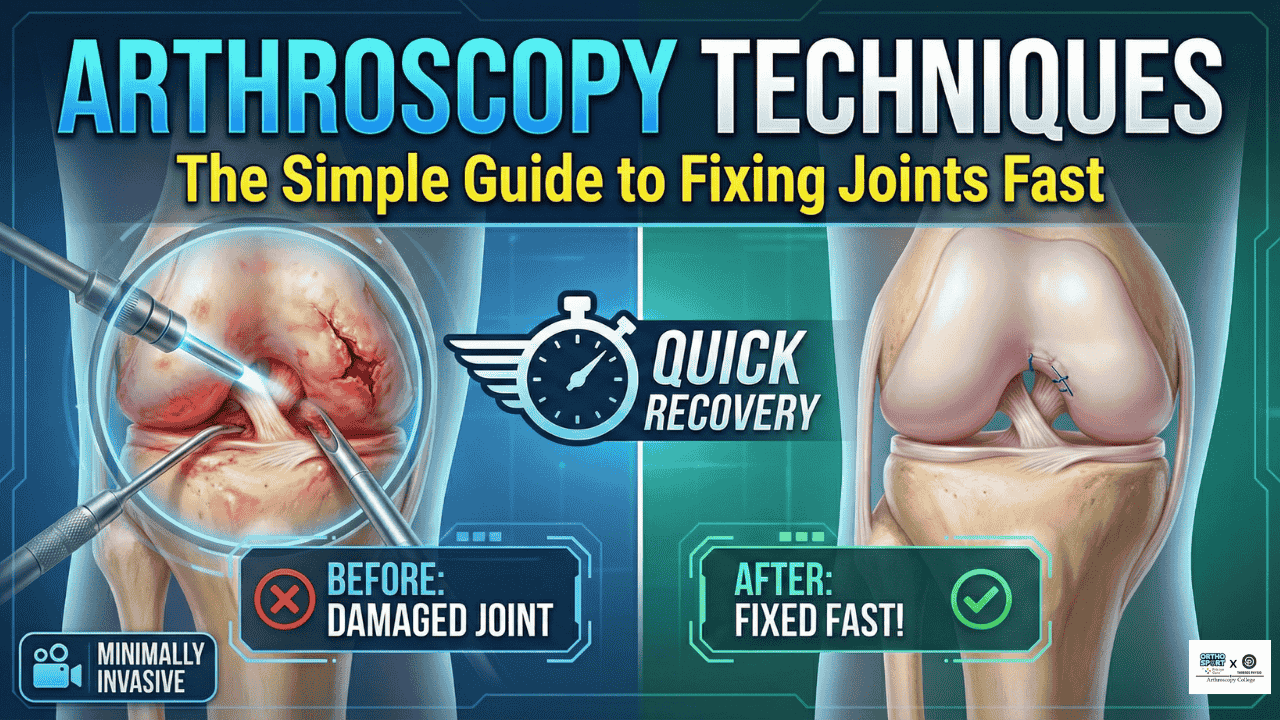
In the past, if you had a knee problem, doctors had to make a large cut to see what was wrong. That hurt a lot and took a long time to heal. Today, doctors use a special tool called an arthroscope.

Think of the arthroscope as a pencil-thin tube with a tiny fiber-optic camera and a light on the end. The doctor makes a tiny cut—about the size of a buttonhole—and slides this camera inside. The camera sends live video to a big TV screen, letting the doctor see your cartilage, ligaments, and bones in super high definition!

Did You Know? Because the cuts are so small, this is often called “Keyhole Surgery” or “Minimally Invasive Surgery.”

Why Do Doctors Do It? (Finding & Fixing)

Doctors use arthroscopy for two main reasons:

  1. To Diagnose (Find the Problem): Sometimes, X-rays and MRI scans don’t show everything. An arthroscopy lets the doctor see exactly what is causing your pain, stiffness, or swelling.
  2. To Treat (Fix the Problem): Once they see the problem, they don’t just leave it there! They can insert tiny superhero tools (like miniature scissors or shavers) through another small hole to repair tears, remove loose bone, or stitch up ligaments.

Which Joints Can Be Treated? (Knee, Shoulder & More)

While doctors can look inside almost any joint, they use arthroscopy most often for the joints that move a lot.

  • The Knee: This is the most common one! It’s used to fix torn meniscus (cartilage) or ACL injuries.
  • The Shoulder: Great for fixing rotator cuff tears or disconnected shoulders.
  • The Hip: Helps with hip pain and extra bone growth.
  • The Ankle: Used for ankle pain after sprains or fractures.
  • The Elbow & Wrist: For treating stiff joints or removing loose bits of bone.

At Arthroscopy College, we specialize in teaching these advanced techniques to help patients recover faster.

Common Problems Fixed by Arthroscopy

Your joints are like hinges that help you move. Sometimes, parts of these hinges break or get inflamed. Here is what arthroscopy can fix:

  • Torn Ligaments: Like the ACL in your knee (common in soccer players!).
  • Torn Cartilage: The meniscus in the knee or the labrum in the shoulder.
  • Loose Bodies: Tiny chips of bone or cartilage that float around and get stuck (like a pebble in your shoe).
  • Inflammation (Synovitis): When the lining of the joint gets swollen and angry.
  • Carpal Tunnel Syndrome: Pressure on the nerve in your wrist.
  • Rotator Cuff Tears: When the muscles that help lift your arm get ripped.

Do you think you might have one of these issues?

How to Get Ready (Preparation)

Getting ready for arthroscopy is easy, but you have to follow the rules!

  • Tell Your Doctor: List all the medicines you take. You might need to stop some of them (like blood thinners) a few days before.
  • The “NPO” Rule: This stands for “Nothing by Mouth.” usually, you cannot eat or drink anything after midnight the night before surgery. This keeps you safe while you sleep during the surgery.
  • Dress comfortably: Wear loose clothes (like gym shorts) that are easy to put on later.
  • Get a Ride: You won’t be allowed to drive home, so ask a friend or family member to pick you up.

Step-by-Step: What Happens During the Surgery?

It might sound scary, but it is actually very organized. Here is what happens:

  1. Anesthesia: The doctor gives you medicine so you don’t feel any pain. You might be asleep (General Anesthesia) or just numb in that area (Local/Regional Anesthesia).
  2. The Incision: The surgeon makes a tiny cut (about 4mm small!).
  3. The Water: They pump sterile fluid (saltwater) into the joint. This expands the joint like a balloon so the doctor has room to see and work.
  4. The Camera: The arthroscope goes in. The doctor watches the TV screen to explore.
  5. The Repair: If something is broken, they make another tiny cut to insert small tools to fix it.
  6. The Finish: The water is drained, and the cuts are closed with one or two small stitches or sticky tape.

Watch Dr. Manu Bora explain how this works in 3D:

Arthroscopic ACL Reconstruction { 3D Animation } in Hindi

This video shows the incredible “inside view” of a knee surgery using these tiny tools.

Arthroscopy vs. Open Surgery: The Big Difference

Why is arthroscopy so popular? Let’s compare it to the old-fashioned “Open Surgery.”

FeatureArthroscopy (Keyhole)Open Surgery (Traditional)
Incision SizeTiny (Buttonhole size)Large (Several inches)
PainLess painMore pain
Hospital StayGo home same dayStay in hospital for days
RecoveryFast (Weeks)Slow (Months)
ScarringAlmost invisibleBig scar

Risks and Safety (Is it Dangerous?)

Arthroscopy is very safe! Complications are rare (happening in less than 1% of cases). However, like any surgery, there are small risks:

  • Infection: Germs getting into the cut.
  • Blood Clots: Rarely, blood can clump in the leg veins.
  • Swelling or Bleeding: The joint might be puffy for a few days.

Recovery: Getting Back to Action

The best part about arthroscopy is how fast you heal! You can usually go home an hour or two after surgery.

To heal quickly, remember R.I.C.E. for the first few days:

  • Rest: Take it easy.
  • Ice: Put ice packs on the joint to stop swelling.
  • Compress: Wrap it with a bandage.
  • Elevate: Keep the joint raised up on a pillow.

Important: You must do your Physiotherapy exercises. This helps your muscles get strong again. Most people can go back to school or desk work in a few days, and back to sports in a few weeks or months, depending on the surgery.

See how we train experts to do this perfectly:

Dr. Manu Bora teaching the next generation of surgeons exactly how to perform these advanced repairs.

A Quick History Lesson (Who Invented It?)

Did you know arthroscopy started over 100 years ago?

  • 1912: A doctor named Severin Nordentoft was the first to write about looking inside a knee.
  • 1960s: A Japanese doctor named Masaki Watanabe (the “Father of Arthroscopy”) improved the camera so much that doctors could finally see clearly.
  • 1970s: Dr. Robert Jackson brought these techniques to the Western world, saving the careers of many famous athletes!

Why Choose Arthroscopy College?

At Arthroscopy College, led by the renowned Dr. Manu Bora, we use the most advanced technology available, like the “All-Inside Internal Brace” technique. This allows for:

  • Faster Recovery: Walk the next day!
  • No Pain: Advanced pain management.
  • World-Class Training: We train surgeons from all over the world.

Check out our Gallery to see our success stories!

Frequently Asked Questions (FAQs)

1. Is arthroscopy painful?

Most patients feel very little pain compared to open surgery. You will have anesthesia during the surgery so you won’t feel anything. Afterward, simple medicine usually handles any soreness.

2. How long does the surgery take?

It is very fast! Most procedures take between 30 minutes to 2 hours.

3. Can I walk after knee arthroscopy?

In many cases, yes! You might need crutches for a few days, but Dr. Manu Bora’s advanced techniques often allow patients to walk immediately.

4. Is it expensive?

Arthroscopy saves money because you don’t have to stay in the hospital overnight.

Shoulder Arthroscopy Fellowship

Are you an orthopedic surgeon who wants to become a master of the shoulder joint? Or maybe you are a medical student dreaming of fixing sports injuries like a pro?

If you want to stop just watching surgeries and start performing them, you are in the right place.

Welcome to Arthroscopy College, where we turn good surgeons into great experts. In this guide, we will tell you everything you need to know about the Shoulder Arthroscopy Fellowship. We have looked at the top programs in the world (like Max Healthcare and Alps Surgery Institute) and built something even better for you—focused on real hands-on skills.

What is a Shoulder Arthroscopy Fellowship?

Imagine a video game where you have to fix a broken machine inside a tiny box without opening it. That is what Arthroscopy is! It is a “Keyhole Surgery.” Surgeons use a tiny camera and small tools to fix joints through small cuts (holes) instead of big open wounds.

A Shoulder Arthroscopy Fellowship is a special advanced training program. It is for doctors who have already finished their main studies (MS or DNB) but want to become super-specialists in:

  • Fixing torn ligaments (the ropes that hold bones together).
  • Repairing rotator cuffs (the muscles that move your shoulder).
  • Treating sports injuries (like cricket or football injuries).

Did You Know? Most general orthopedic surgeons do not know how to do advanced arthroscopy. A fellowship gives you the “Superpower” to fix joints that others can’t!

Why Choose Arthroscopy College? (The #1 Choice)

At many hospitals, “Fellowship” means you stand in the corner and watch the senior doctor operate. You might hold a hook, but you rarely get to do the main surgery.

At Arthroscopy College, we are different.

  • 100% Hands-On Training: You don’t just watch; you learn to hold the camera and use the tools.
  • Expert Mentorship: Learn directly from Dr. Manu Bora, an expert in All-Inside ACL and complex shoulder surgeries.
  • Latest Technology: We use the newest tools like “Fiber Tape Internal Brace” which helps athletes recover faster.
  • Real Results: Our fellows leave with the confidence to start their own practice.

Book a Free Consultation with Dr. Manu Bora

Who Can Join? (Eligibility)

To join this super-specialist course, you need to be a qualified doctor. Here are the simple rules:

  1. Education: You must have an MS (Master of Surgery) or DNB (Diplomate of National Board) in Orthopedics.
  2. Passion: You must be eager to learn sports medicine and keyhole surgery.
  3. Registration: You should have a valid medical license.

Note: International candidates can also apply!

Course Syllabus: What Will You Learn?

We cover everything the top institutes cover, plus practical skills they often miss.

1. The Basics (Foundation)

  • Anatomy: Understanding every muscle, bone, and nerve in the shoulder.
  • Biomechanics: How the shoulder moves and why it gets hurt.
  • Imaging: How to read MRI and CT scans like a detective to find the problem.

2. Arthroscopy Skills (Keyhole Surgery)

  • Shoulder Instability: Fixing shoulders that keep popping out (dislocation).
    • Bankart Repair
    • Latarjet Procedure (for bone loss)
  • Rotator Cuff Repair: Sewing torn muscles back to the bone using advanced anchors.
  • Frozen Shoulder: Releasing tight tissues to make the joint move freely again.

3. Sports Medicine & Rehab

Surgery is only 50% of the cure. The rest is rehabilitation (exercise).

4. Joint Replacement (Arthroplasty)

Sometimes, the joint is too damaged to fix. You will learn:

  • Total Shoulder Replacement.
  • Reverse Shoulder Arthroplasty (a special surgery for bad arthritis).

See It in Action: Dr. Manu Bora’s Technique

Watch how we treat complex shoulder dislocations using the latest techniques. This is exactly what you will learn to do.

Why this video matters: It shows the exact knotless anchor technique you will master during your fellowship.

Hands-On Training vs. Observation

This is the most important part. Compare us with others:

FeatureStandard FellowshipArthroscopy College Fellowship
Your RoleObserver (Watcher)Surgeon (Doer)
MentorshipSenior doctors are busyDirect access to Dr. Manu Bora
CasesMostly basicsComplex sports injuries & revisions
TechnologyStandard screwsFiber Tape & Internal Brace (Advanced)

Fellowship Duration & Details

  • Duration: Flexible options available (6 Months to 1 Year).
  • Location: Gurgaon / Delhi NCR / Mumbai / Bangalore (We have centers across India).
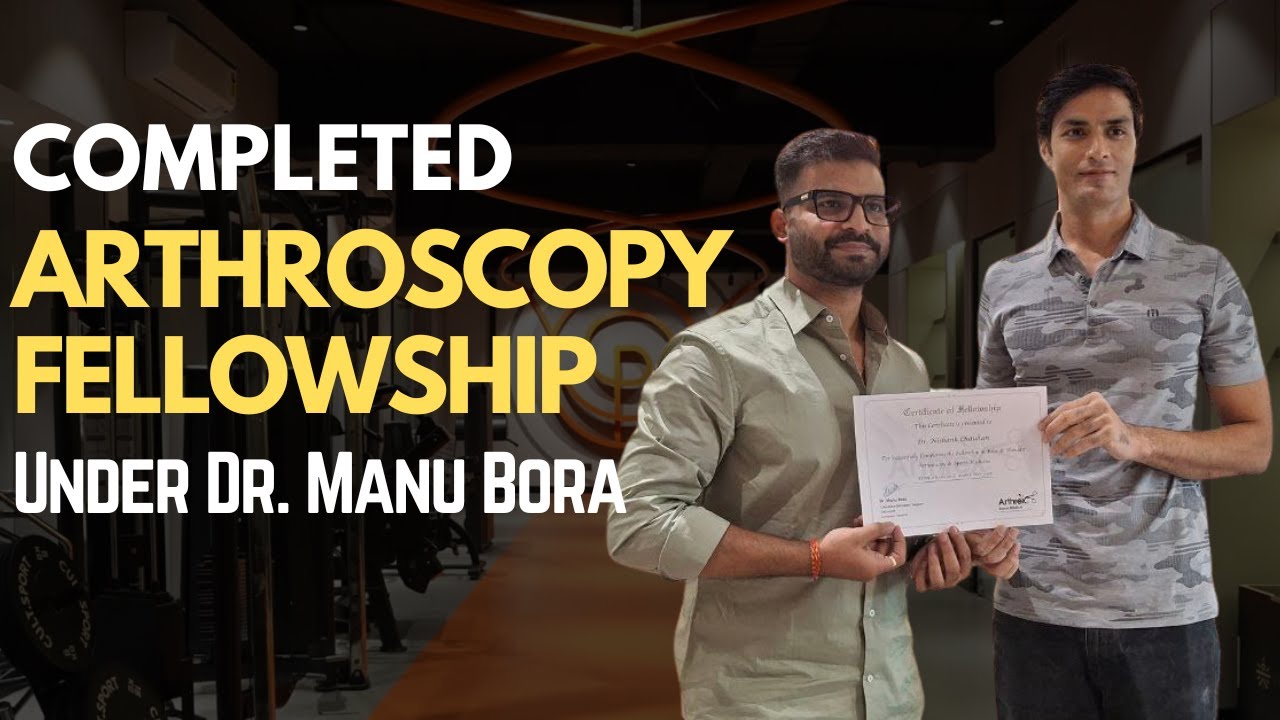
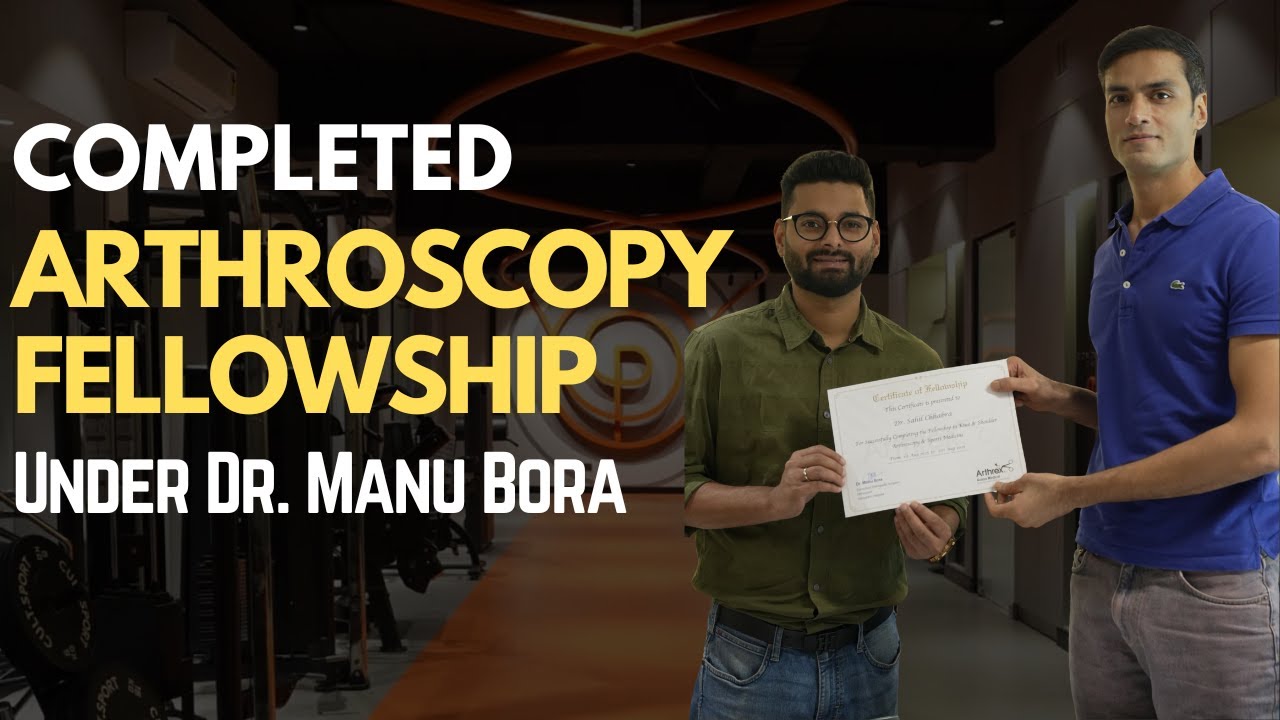
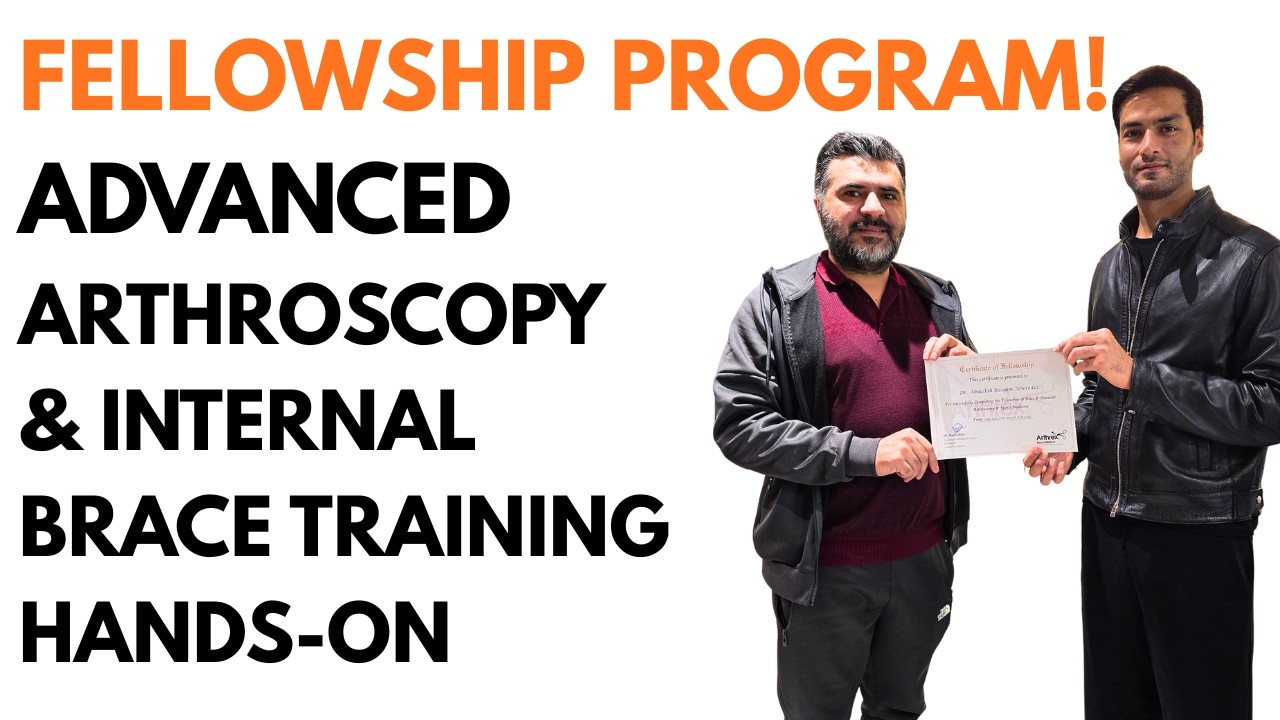
  • Certification: You will receive a prestigious certificate from Fellowship Details.

Want to check our past fellows?

  • Visit our Gallery to see our students in action inside the Operation Theatre.

Student Success Stories

Don’t just take our word for it. Hear from a young surgeon who transformed his skills with us.

Arthroscopy & Internal Brace Hands-On Training Fellowship

Relevance: This video explains the curriculum and the daily life of a fellow at Arthroscopy College.

Career Scope: What Happens Next?

After completing your fellowship at Arthroscopy College, amazing doors open for you:

  1. Consultant Surgeon: Work in top corporate hospitals as a specialist.
  2. Sports Team Doctor: Take care of cricket, football, or kabaddi teams.
  3. Start Your Own Clinic: Be the “Go-To” expert in your city for sports injuries.

Academic Faculty: Teach other doctors in medical colleges.

How to Apply

Admission is competitive because we only take a few students to ensure quality training.

Step-by-Step Process:

  1. Prepare your CV: Include your MS/DNB details.
  2. Contact Us: Send your details via WhatsApp.
  3. Interview: A short chat with our team to check your passion.

Selection: If selected, you pay the fee and secure your spot!

Ready to upgrade your career?

Frequently Asked Questions (FAQs)

Q1: Is this fellowship recognized?

Yes, our fellowship is highly respected in the orthopedic community for its practical skill value. While it is a certification by Arthroscopy College, the skills you learn are recognized by hospitals worldwide.

Q2: Can I join if I am from outside India?

Absolutely! We welcome international fellows. We can even help guide you with visa requirements.

Q3: Do I get paid during the fellowship?

Stipends depend on the specific program duration and your experience level. Please contact us for the latest fee structure and stipend details.

Q4: Will I learn knee arthroscopy too?

Yes! Our program often combines Knee and Shoulder training. Check out our Fellowship in Physiotherapy and sports rehab links for more info on our holistic approach.

Apply Now & Become a Master Surgeon

Relevance: This video provides a comprehensive overview of the hands-on training fellowship, detailing the curriculum, surgical exposure, and the unique opportunity to learn advanced techniques like the Internal Brace under Dr. Manu Bora’s mentorship.

Swelling After ACL Surgery – Is It Normal?

Hey there!

Did you just have knee surgery? Or maybe you are getting ready for it?

First, don’t panic. If your knee looks like a big, puffy balloon right now, you are in the right place.

My name is Dr. Manu Bora, and today I am going to talk to you like a friend. I know seeing your knee swollen can be scary. You might think, “Did something go wrong?” or “Will it stay like this forever?”

The short answer is: Swelling is normal. It is actually your body’s way of fixing itself!

But, there are times when you should call your doctor. In this easy guide, I will tell you exactly why your knee swells, how long it lasts, and 8 bad signs you must watch out for.

Let’s get your knee back to normal!

1. What is ACL Surgery? (A Quick Look)

Imagine your knee has four strong ropes holding it together. The ACL (Anterior Cruciate Ligament) is one of the most important ropes in the middle.

If you play sports like football or basketball, you might twist your knee and “pop” this rope. Ouch!

ACL surgery is when a doctor (like me!) goes in and fixes that rope using a new piece of tissue (called a graft). It helps you run, jump, and play again. But right after surgery, your knee needs time to heal.

Did You Know? We use a tiny camera called an arthroscope to see inside your knee. This means we don’t have to make big cuts! Check out our Gallery to see how we do it!

2. Why Does My Knee Swell?

Think of swelling like a construction crew rushing to a broken road.

When you have surgery, your body sends extra blood and fluid to the knee. This fluid carries “worker cells” to fix the cut tissues.

Here are the 3 main reasons for the puffiness:

  • Tissue Trauma: Even though surgery is helpful, it is still a “trauma” to your body. Your knee reacts by getting inflamed.
  • Fluid Buildup: Your body sends extra fluid to protect the area. It’s like a cushion.
  • Not Moving Enough: Since you are resting, your muscles aren’t pumping the old fluid out. It just sits there!

3. The Swelling Timeline: What to Expect

Recovery is a journey. Here is a simple map of what your knee might look like:

Week 1-2: The “Balloon” Phase

  • What happens: Your knee will be very swollen. It might feel tight and warm.
  • Action: Rest, Ice, and keep your leg up high!
  • Pain: You might need medicine. This is the hardest part.

Week 3-6: The “Calming Down” Phase

  • What happens: The big swelling goes down. You might still see a little puffiness above the kneecap.
  • Action: You start walking more (maybe without crutches!).
  • Note: If you walk too much, it might swell up again. That’s okay. Just rest a bit.

Month 2-3: The “Looking Good” Phase

  • What happens: Your knee looks almost normal!
  • Action: You are doing more exercises.

Warning: Sometimes, after a hard workout, it might get a tiny bit swollen. This is just your knee saying, “Hey, I’m still healing!”

4. Is My Swelling Normal? (The “Yes” vs. “No” List)

It’s hard to tell if you are okay or not. Use this simple checklist:

NORMAL (Good Signs)ABNORMAL (Call Doctor)
Swelling goes down after icing.Swelling gets bigger after Week 2.
Knee feels stiff in the morning.Knee is hot, red, and angry.
Mild pain that medicine helps.Sharp pain that medicine can’t fix.
Bruising (yellow or purple).Yellow or green oozing from the cut.

5. 8 Bad Signs You Must Not Ignore

Sometimes, swelling means something is wrong. If you see these signs, call us immediately.

  1. Excessive Swelling: It suddenly gets huge again after going down.
  2. Unbearable Pain: You are crying in pain, and pills don’t help.
  3. Redness & Heat: The skin around the cut is bright red and burning hot. (Could be an infection).
  4. Stuck Knee: You physically cannot bend or straighten it at all, even a little bit.
  5. Weird Noises: A little “click” is okay. A loud, painful “CRACK” is not.
  6. Fever: Your body temperature goes over 101°F (38.5°C). You feel shivering or chills.
  7. Blood Clots (DVT): This is dangerous! Look for sharp pain, redness, or swelling in your calf muscle (back of your lower leg).
  8. Instability: You feel like your knee is going to give out or buckle when you stand.

Need a Quick Opinion? Don’t guess. Send us a message now. Chat on WhatsApp with Dr. Manu Bora

6. How to Reduce Swelling Fast (The RICE Method)

Want to make that balloon go down? Follow the RICE rule!

  • R – REST: Don’t run a marathon! Give your knee a break. Use crutches if your doctor said so.
  • I – ICE: Ice is your best friend. Put an ice pack on your knee for 20 minutes, 4 or 5 times a day. (Don’t put ice directly on the skin; use a towel!).
  • C – COMPRESSION: Wear an elastic bandage or a special knee sleeve. It hugs your knee and pushes the fluid away.
  • E – ELEVATION: This is the most important one! Lie down and put pillows under your heel. Your knee must be higher than your heart. This uses gravity to drain the fluid back into your body.

7. Best Exercises to Pump Fluid Out

Moving your leg gently acts like a pump. It pushes the old, swollen fluid out. Here are 3 easy moves you can do in bed.

(Always ask your physiotherapist before starting!)

1. Ankle Pumps

  • Lie on your back.
  • Move your foot up and down like you are pressing a gas pedal.
  • Do this 10 times every hour.

2. Heel Slides

  • Lie on your back.
  • Slowly slide your heel toward your butt, bending your knee just a little.
  • Slide it back down.
  • Don’t force it if it hurts!

3. Quad Sets

  • Lie with your leg straight.
  • Tighten the muscle on top of your thigh (Quadriceps).
  • Push the back of your knee into the bed.
  • Hold for 5 seconds, then relax.

8. Mental Recovery: Don’t Give Up!

Healing is not just about your body. It is about your mind, too.

It is normal to feel frustrated or sad when you can’t walk fast. You might miss playing sports. This is temporary.

  • Set Small Goals: “Today, I will do my ankle pumps.”
  • Celebrate Wins: “Yay! I bent my knee a little more today!”
  • Stay Connected: Talk to friends or join our support group.

See a Real Recovery Story:

Watch how this patient got back to sports in just a few months!

9. Frequently Asked Questions (FAQs)

Q: Can I travel 3 months after surgery?

A: Usually, yes! But you must stretch your legs often so you don’t get stiff.

Q: Why does my knee click?

A: It might be scar tissue breaking up or fluid moving. If it doesn’t hurt, it is usually okay.

Q: What if I have a lump on my thigh?

A: Very rarely, fluid can get trapped and form a cyst. If you feel a hard lump, show it to your doctor.

Q: When can I play sports again?

A: Most people go back to sports in 6 to 9 months. Don’t rush, or you might hurt it again!

Need Help? Let’s Talk!

At Arthroscopy College, we teach the best ways to heal knees. Dr. Manu Bora is an expert in making sure you recover fast and safe.

Do not wait if you are in pain.

Stay strong. Your comeback starts now!

What is Knee Arthroscopy? (A Simple Guide)

Imagine your knee is like a busy intersection with lots of moving parts. Sometimes, a car breaks down (a bone chips) or a traffic light stops working (a ligament tears). To fix it, you usually have to dig up the whole road, right?

Not anymore.

Knee arthroscopy is like sending a tiny drone with a camera into that intersection to see exactly what’s wrong and fix it—without digging up the whole street. It is a modern, simple way to check and cure knee problems.

At Arthroscopy College, we specialize in these advanced, “keyhole” surgeries that get you back on your feet faster. Whether you are an athlete or just want to walk without pain, this guide is for you.

What Exactly is Knee Arthroscopy?

Knee arthroscopy is a minimally invasive surgical procedure. “Minimally invasive” is a big word that just means the doctors make very tiny cuts—about the size of a buttonhole or a keyhole.

Through these tiny cuts, the doctor inserts a long, thin tool called an arthroscope. This tool has a tiny camera on the end.

  • The Camera: It acts like a flashlight and a video camera combined. It goes inside your knee and shows the doctor a clear picture on a TV screen in the operating room.
  • The Tools: If the doctor sees a problem (like a torn tissue), they can put tiny instruments through another small cut to fix it right then and there.

Because the cuts are so small, you don’t have big scars, and you heal much faster than with old-fashioned “open” surgery.

Did You Know? The word “Arthroscopy” comes from two Greek words: “arthro” (joint) and “skopein” (to look). It literally means “to look inside the joint.”

Why Do Doctors Perform This Surgery?

Doctors use knee arthroscopy for two main reasons: to diagnose (find out what’s wrong) and to treat (fix the problem).

Sometimes, X-rays or MRI scans don’t show everything. Arthroscopy gives the doctor a “live” look inside your knee to see cartilage, bones, and soft tissues clearly.

Common Conditions Treated

Your doctor might recommend this if you have knee pain that doesn’t go away with rest, ice, or medicine. Here are the most common problems fixed by knee arthroscopy:

  • Torn Meniscus: The meniscus is a rubbery cushion in your knee. If it tears, doctors can trim or repair it.
  • ACL or PCL Tears: These are the ligaments (ropes) that hold your knee stable. They are very common injuries in sports.
  • Loose Fragments: Sometimes, small pieces of bone or cartilage break off and float inside the knee, causing it to lock up. The doctor can vacuum these out.
  • Inflammation: The lining of the joint (synovium) can get swollen. Doctors can remove this inflamed tissue.

Kneecap Problems: If your kneecap (patella) is out of position, this surgery can help align it.

Anatomy of the Knee: What’s Inside?

To understand the surgery, it helps to know what the doctor is looking at. Your knee is the largest joint in your body. It is made up of:

  1. Bones: The thighbone (femur), shinbone (tibia), and kneecap (patella).
  2. Cartilage: A smooth, white coating on the bones that helps them glide easily.
  3. Meniscus: Two wedges of rubbery cartilage that act as shock absorbers between your bones.
  4. Ligaments: Strong ropes that hold your bones together. The most famous ones are the ACL (Anterior Cruciate Ligament) and MCL (Medial Collateral Ligament).

When you twist your knee playing sports like football or volleyball, you can damage these parts. That is where Arthroscopy College experts step in to help.

Getting Ready: Before the Surgery

Preparation is easy, but you must follow the rules to stay safe.

  • Medical Checkup: Your doctor might ask for blood tests or an EKG (heart check) to make sure you are healthy enough for surgery.
  • Medications: Tell your doctor about all the medicines you take. You might need to stop taking “blood thinners” (like aspirin or ibuprofen) a week before surgery so you don’t bleed too much.
  • Fasting: Usually, you cannot eat or drink anything for 6 to 12 hours before the surgery. This keeps you safe while under anesthesia.

Need a Second Opinion? If you are unsure if you need surgery, talk to our experts. Chat on WhatsApp

The Procedure: What Happens During Surgery?

Most of the time, this is an outpatient procedure, meaning you go home the same day. The whole surgery usually takes less than an hour.

Step 1: Anesthesia

You won’t feel any pain. The doctor will give you medicine to numb the area. This could be:

  • Local Anesthesia: Numbing just the knee (you stay awake).
  • Regional Anesthesia: Numbing you from the waist down (you are awake but feel nothing).
  • General Anesthesia: You go to sleep and wake up when it’s over.

Step 2: The Setup

The doctor cleans your leg and puts a special stabilizing device on your knee to keep it in the right position. They fill your knee with a sterile fluid (like saltwater) to expand it. This gives the camera plenty of room to see.

Step 3: The Incisions

The surgeon makes 2 or 3 tiny cuts (portals) around your knee.

  • Through one cut, they insert the arthroscope (camera).
  • Through the other cuts, they insert tiny scissors, shavers, or lasers to fix the problem.

Step 4: The Repair

Watching the TV screen, the surgeon repairs torn ligaments, shaves off damaged cartilage, or removes loose bone fragments.

Step 5: Closing Up

Once the job is done, the fluid is drained. The cuts are so small they often only need one stitch or a small bandage strip (steri-strip) to close them. Your knee is wrapped in a soft bandage.

Recovery: What Happens After?

Since the surgery is simple, recovery is usually fast. You will likely go home 1 or 2 hours after the surgery.

The First Few Days

  • R.I.C.E Method:
    • Rest: Stay off your feet.
    • Ice: Use ice packs to reduce swelling.
    • Compress: Keep the bandage on.
    • Elevate: Keep your leg propped up on pillows above your heart level.
  • Pain Management: Your doctor will give you medicine for pain. Take it exactly as directed.
  • Crutches: You might need crutches for a few days to keep weight off your knee.

Rehabilitation (Physiotherapy)

This is the most important part! To get 100% results, you must do exercises to strengthen your leg muscles. At Arthroscopy College, we emphasize a strong rehab program.

  • Early Days: Simple leg lifts and ankle pumps.
  • Later Weeks: Cycling, swimming, and strengthening exercises.

You can usually drive a car again in 1 to 3 weeks. Most people return to full activities or sports in 6 to 8 weeks, depending on what was fixed.

Risks and Complications

Knee arthroscopy is very safe, but like any surgery, there are small risks. These are rare but can include:

  • Infection at the cut site.
  • Blood clots in the leg.
  • Knee stiffness.
  • Swelling or bruising.

Call your doctor immediately if you have a fever, severe pain that medicine doesn’t help, or bad swelling.

Why Choose Arthroscopy College?

Your knee health depends on the skill of your surgeon. At Arthroscopy College, led by experts like Dr. Manu Bora, we use the latest technology to ensure:

  • Smaller Incisions: Less pain and barely visible scars.
  • Faster Recovery: Get back to work or sports in record time.
  • Expert Care: We have fixed thousands of knees, from professional athletes to grandparents.

We don’t just fix your knee; we guide you through the entire journey, from the first consultation to your final sprint on the field.

Frequently Asked Questions (People Also Ask)

Q: Is knee arthroscopy a major surgery?
No, it is considered a minor, minimally invasive surgery. Most patients go home the same day.

Q: How long does the pain last after surgery?
You will feel some pain for a few days, but it goes away quickly. Most people feel much better within a week.

Q: Can I walk immediately after knee arthroscopy?
You can usually walk with crutches right away. Your doctor will tell you when you can put your full weight on your leg, usually within a few days.Q: Is arthroscopy good for arthritis? It can help clean out the knee, but it doesn’t cure arthritis. It is best for fixing mechanical problems like torn meniscus or loose bone fragments.

Ready to Fix Your Knee Pain?

Don’t let knee pain stop your life. The experts at Arthroscopy College are here to help you get back to 100%.

Explore more about our services: ACL Treatments | Fellowship Details | Physiotherapy

Shoulder Arthroscopy Recovery Timeline

Getting shoulder surgery can feel a bit scary, but knowing what happens next makes it much easier. If you or your loved one is planning for this, you probably have one big question: What is the shoulder arthroscopy recovery timeline? Well, you are in the right place. We are going to break it down simply, just like Dr. Manu Bora explains to his patients, so you know exactly when you can get back to your normal life.

When we talk about the shoulder arthroscopy recovery timeline, it is not the same for everyone. But with modern techniques used by experts like Dr. Manu Bora, the healing is much faster than the old methods. Usually, people worry about pain and being stuck in bed, but today, things have changed. Doctors now use advanced technology like the Internal Brace, which helps you move your arm much sooner.

WhatsApp for inquiry

The First Few Days: Immediate Recovery (0-2 Weeks)

Right after your surgery, the first part of the shoulder arthroscopy recovery timeline begins. You might wake up with your arm in a sling. This is just to keep your shoulder safe while it starts to heal. In the old days, you had to wear this for weeks, but with new methods like the Fiber Tape Internal Brace, some patients can start moving their arm gently very soon.

You might feel some soreness, but your doctor will give you medicine to stop the pain. The most important thing here is to rest but also to listen to your physiotherapist. If you are looking to learn more about how these therapies work, you might want to check out our fellowship in physiotherapy. Small movements of your fingers and wrist are good to keep the blood flowing.

During this time, you should not lift anything heavy. It is a time to let the stitches heal. Sleeping can be a little tricky, so it is better to sleep in a chair that leans back or use extra pillows to prop yourself up.

WhatsApp for inquiry

Getting Moving Again: Early Recovery (2-6 Weeks)

This is the phase in the shoulder arthroscopy recovery timeline where the real work starts. Your physiotherapist will teach you exercises to move your shoulder without using your own muscles too much. These are called passive exercises. The goal is to stop your shoulder from getting stiff. Stiffness is the enemy of a good recovery!

If you had a Bankart repair or a rotator cuff repair with the internal brace technique, your doctor might allow you to move more freely than others. This is why it is super important to go to a specialized center. You can see how we train experts in these advanced techniques at our Arthroscopy College.

You will likely stop wearing the sling during the day. You can do light activities like eating or typing, but still, no heavy lifting. This period is crucial for getting your range of motion back.

WhatsApp for inquiry

Building Strength: The Middle Phase (6-12 Weeks)

Now we enter the strengthening part of the shoulder arthroscopy recovery timeline. Your shoulder is healing well, and now it needs to get strong again. You will start using resistance bands and doing light weight training. This is when you feel like your normal self is coming back.

The focus here is on the muscles around the shoulder blade and the rotator cuff. Strong muscles protect the joint. If you are a student or a young doctor reading this, you can see deep details of these procedures in our fellowship details page.

For athletes, this phase is exciting because you can start doing more active drills. But remember, don’t rush! Even if you feel great, the inside of your shoulder is still firming up.

WhatsApp for inquiry

Back to Sports and Full Life (3-6 Months)

This is the final goal of the shoulder arthroscopy recovery timeline. Most people can go back to their full activities, including sports. With Dr. Manu Bora’s advanced internal brace surgery, many athletes go back to sports in just 3 months, which is much faster than the standard 6 months.You can verify these results and see happy patients in our gallery. The internal brace acts like a seatbelt for your ligament, protecting it while you play. This means you don’t have to wait forever to run, throw, or lift.

Always remember, the shoulder arthroscopy recovery timeline can be shorter if you follow your doctor’s advice and do your rehab exercises daily.

WhatsApp for inquiry

Frequently Asked Questions (FAQs)

1. How long is the shoulder arthroscopy recovery timeline?

Generally, it takes about 3 to 6 months for a full recovery. However, with advanced internal brace techniques used by experts, you might return to sports as early as 3 months.

2. When can I sleep flat after shoulder surgery?

Most patients can sleep flat after 4 to 6 weeks. In the beginning, it is better to sleep in a reclined position to avoid pain.

3. Is shoulder arthroscopy painful?

The surgery itself is not painful because of anesthesia. After the surgery, there is some soreness, but modern pain management and minimally invasive techniques make it very manageable.

4. When can I drive after shoulder arthroscopy?

You can usually drive once you are out of the sling and can control the car safely, which is typically around 4 to 6 weeks.

5. Do I need physiotherapy for the whole recovery timeline?

Yes, physiotherapy is a must. It guides you safely from simple movements to full strength. You can learn more about specialized rehab in our fellowship in physiotherapy section.

ACL Arthroscopy

Have you hurt your knee while playing sports? Did you hear a “pop” sound? You might have torn your ACL. Many people get scared when they hear about surgery. But today, acl arthroscopy has changed everything. It is no longer a big, scary operation with big cuts. It is a keyhole surgery that is quick, safe, and effective. If you are a patient wanting to run again, or a doctor looking for the best training, this guide is for you.In the past, acl arthroscopy surgery meant staying in bed for weeks.

But now, technology is better. At Arthroscopy College, we use the “All-Inside” technique. This is a special way of doing knee arthroscopy acl repair that is much stronger. Under the expert guidance of Dr. Manu Bora, we teach surgeons how to give their patients a painless recovery.

Get a Free Opinion on WhatsApp

What is Modern ACL Arthroscopy?

ACL arthroscopy is a procedure where doctors use a tiny camera to see inside your knee. They do not cut your whole knee open. In the old days, doctors used screws to fix the new ligament. These screws could hurt or get loose. Now, we use something called the Internal Brace with FiberTape.

This new method is like putting a seatbelt on your new ligament. It holds everything tight so you can move immediately. This is why the acl arthroscopy recovery time is so short now. If you want to learn this advanced skill, check out our Fellowship Details. It is the best place to learn hands-on.

Walk the Very Next Day

Yes, you read that right. With the advanced acl arthroscopy procedure we teach, patients walk the next day. They do not need bed rest for months. In traditional surgery, the bone is cut a lot, which causes pain. But in our All-Inside technique, we only make tiny holes. This saves the bone and reduces pain.

We have seen many patients go back to office work in just 4-5 days. This fast acl arthroscopy recovery is what every patient wants. You can see real proof of this in our Gallery, where patients are smiling and walking right after surgery.

Chat with Us on WhatsApp for Details

If you are a doctor, simply watching videos is not enough. You need to perform the acl arthroscopy yourself to learn. Dr. Manu Bora is an expert who has done thousands of these surgeries. He teaches you how to use the FiberTape and buttons correctly.

Many young surgeons worry about acl arthroscopy complications. But when you learn the right technique, complications are very rare. We also teach you about rehabilitation. Surgery is only half the work; rehab is the rest. That is why we also offer a Fellowship in Physiotherapy to help your team learn the best exercises.

The Cost and Value

Patients often ask about acl arthroscopy cost. While modern implants might cost a little more, the value they give is huge. Imagine getting back to your job in one week instead of one month. That saves you money in the long run.For doctors, investing in this training at Arthroscopy College is an investment in your career. When your patients recover fast, your practice grows. You become the go-to expert in your city. You can read more about our mentor on the Dr. Manu Bora page.

Book Your Seat or Appointment on WhatsApp

Frequently Asked Questions (FAQs)

1. Is ACL arthroscopy painful?
With the modern All-Inside technique, acl arthroscopy is almost painless. Most patients stop taking painkillers after 2-3 days because the cuts are very small.

2. How long is the acl arthroscopy recovery?
You can walk without support the next day. You can join the office in 4-5 days. For sports, you can usually return in 4-5 months, which is much faster than older methods.

3. What is the success rate of this surgery?
The success rate is over 99% when done with the Internal Brace. The FiberTape protects the ligament, preventing it from tearing again.

4. Do you use screws in this procedure?
No, in the All-Inside acl arthroscopy procedure, we use cortical buttons and FiberTape. We avoid big screws that damage the bone.

5. Can I run after this surgery?
Absolutely. The goal of this surgery is to get you back to running and sports. With proper rehab, you will be running better than before.

Diagnostic Arthroscopy Knee

Do you know how doctors see inside a knee without making a big cut? It is called diagnostic arthroscopy knee. This is a very special way to look at knee problems like ACL tears or meniscus injuries. If you are a young doctor or a student who wants to learn this, you are in the right place. Dr. Manu Bora, a world-famous ACL expert, teaches this skill perfectly.

In this blog, we will learn what diagnostic arthroscopy knee is, why it is important, and how you can become a master at it by joining the best arthroscopy fellowship at Arthroscopy College.

What is Diagnostic Arthroscopy Knee?

Diagnostic arthroscopy knee is a simple procedure. The doctor makes two tiny holes in the knee. These holes are called “portals.” Then, they put a small camera inside. This camera is called an arthroscope. It shows everything on a big TV screen.

With diagnostic arthroscopy knee, the surgeon can see the:

  • ACL (Anterior Cruciate Ligament): Is it torn or fine?
  • Meniscus: Is there a crack in the cushion of the knee?
  • Cartilage: Is the smooth bone cover damaged?

This method is much better than opening the whole knee. It heals very fast, and the patient feels less pain. Dr. Manu Bora uses this every day to help people run and play sports again.

Need a Free Opinion? If you have knee pain or want to learn from Dr. Manu Bora, click here to chat on WhatsApp: Get Free Opinion on WhatsApp

Why You Need to Learn Diagnostic Arthroscopy Knee

If you want to be a great orthopedic surgeon, you must know diagnostic arthroscopy knee. It is the “ABC” of knee surgery. Before you fix an ACL or stitch a meniscus, you have to look around the knee properly.

In Dr. Manu Bora’s Fellowship in Arthroscopy, you learn to check 9 important points inside the knee. If you miss one point, you might miss a problem. That is why hands-on training is so important. You cannot learn this just by reading books. You need to hold the camera and see it with your own eyes.

Here is a video where you can see how Dr. Manu Bora teaches these skills to young surgeons:

Hands-On Training at Arthroscopy College

At Arthroscopy College, we don’t just talk; we do. Our fellowship is special because you get to practice diagnostic arthroscopy knee on real models and even see live surgeries.

Here is what you will do:

  1. Make Portals: Learn exactly where to make the small cuts so you don’t hurt the patient.
  2. Hold the Camera: It feels like a video game, but you are saving lives. You learn to move the camera to see the ACL and PCL clearly.
  3. Use the Probe: A probe is a small hook. You use it to pull and check if the tissues are strong.

Dr. Manu Bora has 15+ years of experience. He will hold your hand and teach you. He is famous for the “Internal Brace” technique, which makes the ACL very strong. But before you do that, you must master diagnostic arthroscopy knee.

Want to Join the Fellowship? Don’t wait! Seats are limited. Message us now to book your slot: Apply for Fellowship on WhatsApp

Advanced Techniques: Beyond Diagnostic Arthroscopy Knee

Once you know diagnostic arthroscopy knee, you can learn big surgeries. Dr. Manu Bora is an expert in:

  • ACL Reconstruction with Internal Brace: This uses a Fiber Tape to make the knee super strong immediately.
  • All-Inside ACL Surgery: No screws, only buttons and tape. It is the most advanced way.
  • Meniscus Repair: Saving the meniscus instead of cutting it out.

When you do a diagnostic arthroscopy knee, you might find a hidden meniscus tear. Dr. Manu Bora will teach you how to fix it right there. You can see more about the fellowship experience here:

Why Choose Dr. Manu Bora?

Dr. Manu Bora is not just a doctor; he is a teacher. He has helped thousands of patients and trained many doctors. His clinic offers the best Fellowship in Physiotherapy and sports medicine.

By learning diagnostic arthroscopy knee here, you get:

  • Confidence to operate alone.
  • Certificate from a top institute.
  • Knowledge of the latest machines and tools.

You can check our Gallery to see happy students and successful surgeries. Whether you want to learn about Dr. Manu Bora or our specific Fellowship Details, everything is designed to make you a winner.

Have Questions? We are here to help you 24/7. Just drop a message: Chat with Dr. Manu Bora’s Team

Success Stories

Many students come to us scared of holding the camera. But after learning diagnostic arthroscopy knee with us, they go back to their cities and start doing surgeries. They fix ACL tears, they fix shoulder pain, and they help athletes get back to sports.We also focus on rehabilitation. A good surgery needs good exercise after. Our Fellowship in Physiotherapy teaches how to make the knee move perfectly after the operation.

Frequently Asked Questions (FAQs)

1. What is diagnostic arthroscopy knee?

It is a small surgery where a camera is put inside the knee to check for injuries like ACL tears or meniscus damage. It helps the doctor plan the treatment.

2. Is diagnostic arthroscopy knee painful?

No, it is done under anesthesia, so the patient sleeps and feels no pain. Recovery is very fast compared to open surgery.

3. Can I learn diagnostic arthroscopy knee at Arthroscopy College?

Yes! Dr. Manu Bora teaches diagnostic arthroscopy knee with hands-on training on models and live surgeries in his fellowship program.

4. How long does the diagnostic arthroscopy knee procedure take?

It usually takes only 15 to 30 minutes to look inside and diagnose the problem. If repairs are done, it takes longer.

5. Why is Dr. Manu Bora the best for this training?

Dr. Manu Bora has over 15 years of experience and uses the latest technology like the Internal Brace. He teaches you step-by-step, making it easy to understand.

Ready to upgrade your skills? Visit Arthroscopy College today or contact us directly on WhatsApp! Click to WhatsApp

Arthroplasty vs Arthroscopy (Which One is Right for You?)

Are you confused about arthroplasty vs arthroscopy? If your knee or shoulder hurts, you might hear these big words from doctors. But don’t worry, it is actually very simple. Imagine your joint is like a car tyre. If the tyre has a small puncture, you fix it that is like arthroscopy. But if the tyre is completely worn out and bald, you change the whole tyre that is like arthroplasty (joint replacement).

In this blog, we will learn the difference between arthroscopy and arthroplasty recovery time, the cost, and which one is best for you. Dr. Manu Bora, a leading ACL expert, always says: “Save your natural knee whenever possible.” Let’s dive in!

What is the Main Difference?

The biggest difference between arthroplasty vs arthroscopy is how much of your joint is touched.

  • Arthroscopy (Repair): This is a “keyhole” surgery. The doctor makes 2-3 tiny holes (like a buttonhole). They put a camera inside and fix torn ligaments (like ACL) or repair damaged cartilage. You keep your natural bone.
  • Arthroplasty (Replacement): This is a major surgery. The doctor cuts out your damaged bone and cartilage and puts in a metal or plastic part. This is done when the joint is fully destroyed.

If you are young or have a sports injury, you usually need arthroscopy. If you are older (above 60) and your bones are rubbing against each other, you might need arthroplasty.

Stop guessing and start healing. Send your MRI report to Dr. Manu Bora for a free expert review. 👉 Click Here to WhatsApp for a Free Opinion

When Do You Need Arthroplasty (Joint Replacement)?

Dr. Manu Bora explains that arthroplasty (like Total Knee Replacement) should usually be the last option. According to his expert advice, you should only think about replacement if:

  1. Your Age is Above 60: Artificial joints last about 20-25 years. If you get it done at age 40, you might need another risky surgery when you are 60 or 65.
  2. Bone-on-Bone Contact: In a standing X-ray, if there is zero gap between your bones, it means the cushion (cartilage) is totally gone.
  3. Daily Pain: You cannot walk, climb stairs, or sleep without strong painkillers every day.

If you still have some gap in your joint, Dr. Bora suggests avoiding replacement. You can learn more about non-surgical options on our Dr. Manu Bora profile page.

When Do You Need Arthroscopy (Keyhole Surgery)?

Arthroscopy is the star of modern sports medicine. It is minimally invasive. Dr. Manu Bora uses advanced techniques to repair damage so you don’t need a metal knee later. This is perfect for:

  • ACL or PCL Tears: Fixing ligaments so your knee is stable.
  • Meniscus Tears: Stitching the cushion of your knee.
  • Cartilage Damage: If you have a “pothole” in your cartilage, Dr. Bora can fill it using your own cells!

Advanced Cartilage Transplants: For young patients, Dr. Bora uses techniques like OATS (taking healthy bone from one side to fill a hole) or AutoCart (mixing your cartilage dust with glue to make new cartilage). This is far better than replacing the whole knee.Students who want to learn these advanced skills can check our Fellowship Details to master these life-saving surgeries.

Sometimes, you don’t even need surgery! PRP or biological treatments might help. Ask us how. 👉 Chat on WhatsApp Now

Arthroplasty vs Arthroscopy Recovery Time

Recovery is very different for both.

  • Arthroscopy Recovery: It is fast. You might walk the same day or the next day. For complex repairs like cartilage transplant, you might need crutches for 1 month, but you can return to running and sports in 4-6 months with good rehab. We even offer a specialized Fellowship in Physiotherapy to train experts in this fast recovery.
  • Arthroplasty Recovery: This takes longer. You will need physiotherapy for months to learn to walk with the new artificial joint. You generally cannot run or play heavy sports like football after a replacement.

Cost and Risks

When comparing arthroscopy vs arthroplasty cost in India, arthroscopy is generally more affordable and has fewer risks.

  • Risks: Arthroplasty is a bigger surgery, so there is a higher risk of infection or blood clots compared to the tiny cuts of arthroscopy.
  • Longevity: A repaired natural knee (Arthroscopy) is always better than a metal knee (Arthroplasty) because it is yours.

You can see success stories of patients who saved their knees in our Gallery.

Frequently Asked Questions (FAQs)

1. Can arthroscopy prevent knee replacement? Yes! By fixing torn ligaments (like ACL) or repairing cartilage early with arthroscopy, you stop the knee from rubbing. This prevents arthritis and saves you from needing a replacement later.

2. What is the recovery time for arthroscopy vs arthroplasty? Arthroscopy recovery is quick (weeks to a few months). Arthroplasty recovery is slow (several months) and limits your ability to play high-impact sports.

3. Is arthroscopy cheaper than arthroplasty? Generally, yes. Since the hospital stay is shorter (often just 1 day) and fewer materials are used, the cost is usually lower than a total joint replacement.

4. Can I play sports after arthroplasty? It is difficult. Doctors usually advise walking, swimming, or golf. High-impact sports like football or cricket are usually not allowed after replacement. But after arthroscopy, you can often go back to professional sports.

5. How do I know if I need surgery? Don’t guess. Look at your X-ray and MRI. If there is a gap between bones, try to save the knee. Visit Arthroscopy College for more resources or contact us directly.

Your joints deserve the best care. Don’t wait until it’s too late. 👉 Message Dr. Manu Bora on WhatsApp

Ankle Arthroscopy Technique

Have you twisted your ankle badly? Do you feel pain that just won’t go away? If you are a patient or a doctor looking for the best arthroscopy fellowship, understanding ankle arthroscopy is very important. As an expert with over 15 years of experience in this field, I have seen many people suffer because they delay treatment. Today, we will talk about how modern technology has changed ankle arthroscopy surgery completely.

In the past, doctors used to make big cuts to fix ankle problems. This meant more pain and a long time in bed. But now, with ankle arthroscopy, we use a tiny camera and small instruments to fix the problem from the inside. This is minimally invasive, which means less pain and a much faster ankle arthroscopy recovery period. At Arthroscopy College, under the guidance of Dr. Manu Bora, we teach these advanced skills to the next generation of surgeons.

Get a Free Opinion on WhatsApp

Why Recovery is Fast with Modern Techniques

The biggest worry for anyone is the ankle arthroscopy recovery time. In traditional surgery, you might have to wear a plaster for 2 months. That is a long time! Your muscles get weak, and your joints get stiff. But with the techniques we use, like the Internal Brace, things are different.

When we do ankle arthroscopy surgery for a ligament tear (like the ATFL), we don’t just stitch it. We add a “seatbelt” called an Internal Brace. This protects the repair. Because of this, patients can often start walking from the very next day. This is a game-changer for anyone who wants to get back to sports or daily life quickly. You can learn more about these techniques on our Fellowship Details page.

Understanding the Procedure

Many times, the ankle hurts because of loose tissue or bone fragments inside. This is where ankle arthroscopy debridement recovery time becomes important. Debridement means “cleaning up.” We go inside with a camera and clean out the bad tissue.

If you have an unstable ankle that twists again and again, simple cleaning is not enough. You need a ligament repair. Dr. Manu Bora is an expert in doing this with the all-inside technique. As you can see in his videos, he uses FiberTape to make the ankle strong immediately. This is why our Fellowship in Physiotherapy is also popular, as therapists learn how to handle these fast-track patients.

Chat with Us on WhatsApp for Details

Proof of Fast Recovery

You might be thinking, “Is it really possible to walk so soon?” Yes, it is. We have many success stories. In the video below, you can see how surgery is decided and why the right technique matters. If you just repair the ligament without the internal brace, a simple slip can break the stitches again.

But with the internal brace, the ankle arthroscopy recovery is safe. The tape takes the load while your natural ligament heals. This prevents the repair from failing. If you are a doctor, you can learn these secrets by joining our program. Check out our Dr. Manu Bora page to see his qualifications and expertise.

Why Choose Arthroscopy College?

Learning ankle arthroscopy requires practice. You cannot learn it just by reading books. We provide hands-on training where you can touch the instruments and feel how the surgery is done. Our students come from all over the world to learn these specific skills.

Whether it is for ankle arthroscopy recovery time management or learning complex surgeries, we cover it all. We also have a great Gallery where you can see our training center and happy students. If you ignore your ankle pain today, it can lead to arthritis later. So, taking action now is very important.

Book Your Seat or Appointment on WhatsApp

Frequently Asked Questions (FAQs)

1. What is the recovery time for ankle arthroscopy?
For simple cleaning (debridement), recovery is very fast, often within 2-3 weeks. For ligament repair with an Internal Brace, you can walk immediately, but full sports recovery takes about 3-4 months.

2. Is ankle arthroscopy painful?
It is much less painful than open surgery. Because the cuts are tiny, the pain is less, and the ankle arthroscopy recovery period is smoother.

3. When can I walk after surgery?
With Dr. Manu Bora’s Internal Brace technique, patients are allowed to put weight on their leg and walk from the very next day after surgery.

4. Do I need a plaster after surgery?
In the modern technique we use, there is usually no need for a plaster. You might wear a walking boot for a few weeks, which is much more comfortable.

5. What is the success rate of this surgery?
The success rate is very high, over 95%, especially when done with the Internal Brace method that prevents the ligament from stretching out again.

Arthroscopy Implants for Faster and Safer Knee Recovery

When you hear about knee surgery, the first thing that comes to mind is, “What will they put inside my knee?” These things are called arthroscopy implants. If you are a patient or a young doctor looking for the best arthroscopy fellowship in India, understanding these tiny tools is very important. Today, we will talk about why choosing the right implant, like the ACL FiberTape Internal Brace, can change your life or your medical practice.Many people think all surgeries are the same, but they are not.

The difference lies in the arthroscopy implants used. In the past, doctors used bio screw vs titanium screw to fix ligaments. But technology has changed. Now, we use advanced methods that help patients run and jump much faster. At Arthroscopy College, under the guidance of Dr. Manu Bora, we teach and use these world-class techniques.

Get a Free Opinion on WhatsApp

Why Old Screws Are Not Enough Anymore

In traditional ACL reconstruction implants, surgeons used big screws to hold the new ligament. These could be metal (titanium) or bio-screws (which melt in the body). But there is a problem. Screws can sometimes become loose or cause pain. Also, they require you to rest for a long time.

This is why arthroscopy implants have evolved. We now use something called an Internal Brace with FiberTape. Think of it like a seatbelt for your new ligament. It protects the repair so you can start walking the very next day. If you want to learn these advanced skills, our Fellowship Details page has all the info you need.

The Magic of FiberTape Internal Brace

You might wonder, “Is the new way really better?” Yes, it is. In the video above, you can see the difference. With old arthroscopy implants like screws, a patient might still be on crutches after 2 months. But with the ACL FiberTape Internal Brace, patients are often running and jumping in the same time.

As an expert with over 15 years in this field, I can tell you that the stability provided by FiberTape is unmatched. It does not break easily. In fact, many people ask if the “button” used in surgery will break. Dr. Manu Bora explains in his videos that these buttons are super strong. The internal brace takes the load, protecting your knee while it heals naturally.

Chat with Us on WhatsApp for Details

Learn From the Best: Dr. Manu Bora

If you are a doctor, you need to know how to use these modern arthroscopy implants. You cannot learn this just by reading books. You need hands-on training. Dr. Manu Bora is a master of these techniques. He teaches how to perform all-inside ACL reconstruction without using big cuts or large screws.

By joining our program, you get to learn directly from him. You can see his profile and achievements on the Dr. Manu Bora page. Whether you are a surgeon or a therapist, understanding these implants helps you treat patients better. We even have a special Fellowship in Physiotherapy because rehab is different for these advanced surgeries.

Common Myths About Implants

Some people are scared that the arthroscopy implants might break or hurt. As seen in the video above, Dr. Bora jokes with a patient about breaking the button. It is nearly impossible to break these modern buttons with normal activity. They are designed to hold tight.

Also, unlike bio screw vs titanium screw debates where people worry about metal staying in the body or bio screws causing cysts, the FiberTape system is soft and sits flush against the bone. It feels natural. You can check our Gallery to see happy patients who have undergone these procedures.

Book Your Seat or Appointment on WhatsApp

Frequently Asked Questions (FAQs)

1. What are the best arthroscopy implants for ACL surgery? The best modern options are the Internal Brace with FiberTape and adjustable buttons. They offer better stability and faster recovery compared to traditional screws.

2. Is a bio screw better than a titanium screw? Both have pros and cons. Titanium is strong but permanent. Bio screws dissolve but can sometimes cause swelling. However, the all-inside technique with FiberTape eliminates the need for large screws entirely.

3. Will I feel the implants inside my knee? No, you generally do not feel them. Modern arthroscopy implants are very low-profile and are placed deep inside the bone or on the surface where they don’t irritate the skin.

4. How long do these implants last? They are designed to stay in your body forever. The buttons and FiberTape are made of inert materials that do not react with your body, providing lifelong support.

5. Can I run after surgery with these implants? Yes! With internal brace technology, many patients start jogging as early as 4-6 weeks and return to sports much faster than with older methods.


Visit our main website for more info: Arthroscopy College