Have you ever wondered how doctors fix a knee or shoulder without making a big cut? It sounds like magic, but it is actually a smart technology called Arthroscopy.
If you or someone you know has joint pain, this guide is for you. We will explain everything in simple words that even a 5th grader can understand. We will cover what it is, how it works, and why it is the best way to fix sports injuries today.
What is Arthroscopy?
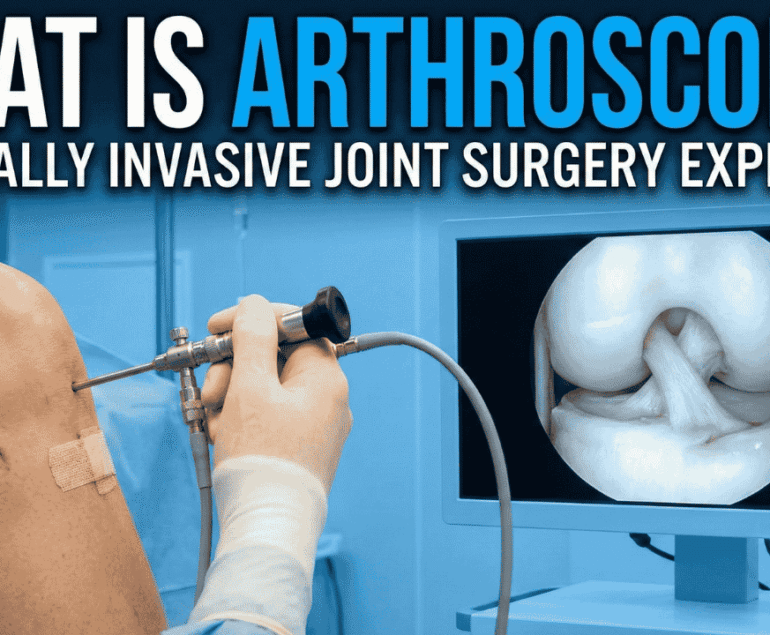
Arthroscopy (say: ar-thros-co-pee) is a way for doctors to look inside your body without opening it up completely.
Think of it like a “keyhole.” instead of opening a big door to see inside a room, you just peek through the keyhole.
- Arthro means Joint (like your knee or shoulder).
- Scopy means to look.
So, it literally means “to look inside the joint.”
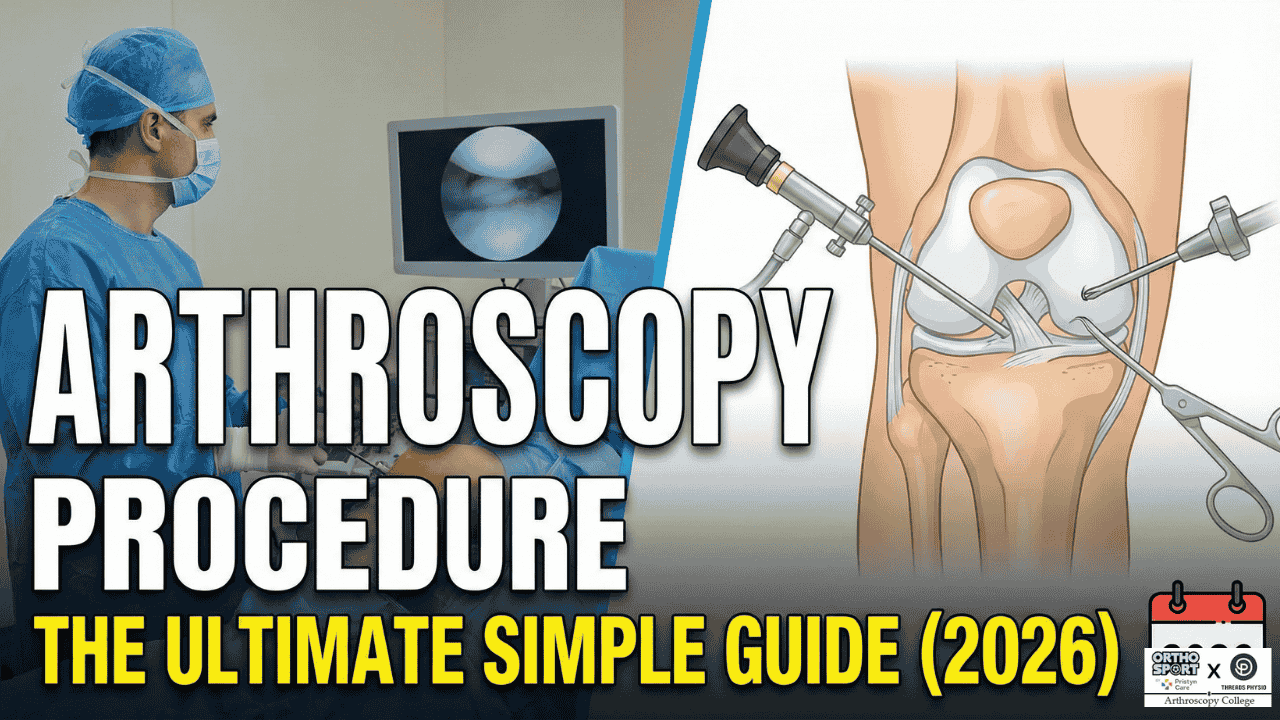
The doctor uses a special tool called an Arthroscope. This is a tiny tube with a super-small camera and a light on the end. It is about the size of a pencil. The camera sends a live video to a TV screen so the doctor can see everything clearly.
Did You Know? Because the cuts are so small, people often call this “Keyhole Surgery” or “Minimally Invasive Surgery.”
Why Do Doctors Do It?
Doctors use arthroscopy for two main reasons:
- To Find the Problem (Diagnosis): Sometimes X-rays and MRI scans don’t show everything. A doctor can use the camera to look inside and see exactly what is wrong.
- To Fix the Problem (Treatment): Once they see the problem (like a torn ligament), they can use tiny tools to sew it back together or clean it up.
Which Joints Can Be Treated?
Arthroscopy can be used on almost any joint in your body. The most common ones are:
- Knee Arthroscopy: For fixing ACL tears or meniscus tears.
- Shoulder Arthroscopy: For rotator cuff tears or if your shoulder keeps popping out.
- Hip Arthroscopy: For hip pain.
- Ankle Arthroscopy: For sports injuries in the foot.
- Wrist & Elbow Arthroscopy: For hand and arm pain.
At Arthroscopy College, Dr. Manu Bora specializes in using the most advanced tools for these surgeries.
Common Problems Fixed by Arthroscopy
Doctors suggest this procedure if you have:
- Ligament Tears: Like the ACL in your knee (very common in sports like football and cricket).
- Meniscus Tears: Rips in the cushion of your knee cartilage.
- Rotator Cuff Tears: Pain in the shoulder muscles.
- Loose Pieces: Tiny bits of bone or cartilage floating inside your joint.
- Inflammation: Swelling in the lining of your joint (called synovitis).
How to Prepare for Surgery
Getting ready is easy. Your doctor will give you a list of rules:
- No Eating or Drinking: Usually, you must stop eating 8 to 12 hours before the surgery.
- Medicine Check: Tell your doctor about any medicines you take. You might need to stop some of them.
- Clothing: Wear loose, comfortable clothes.
- Ride Home: You cannot drive after surgery, so ask a friend or family member to pick you up.
The Procedure: Step-by-Step Guide
Here is exactly what happens on the day of the surgery.
Step 1: Anesthesia
First, the doctor will give you medicine so you don’t feel any pain.
- Local Anesthesia: Numbs just your knee or shoulder. You stay awake.
- General Anesthesia: You go to sleep and wake up when it’s done.
Step 2: The Tiny Cut
The surgeon makes a very small cut (incision) in your skin. It is usually the size of a buttonhole (about 4mm to 6mm).
Step 3: Inserting the Camera
They put the arthroscope (the camera tool) into the cut. Water (saline fluid) flows in to expand the joint so the doctor can see clearly on the TV screen.
Step 4: Fixing the Problem
If they see a tear or damage, they make 1 or 2 more tiny cuts to put in small tools like scissors or shavers to fix it.
Step 5: Closing Up
Once the job is done, the water is drained out. The cuts are so small they often don’t even need big stitches sometimes just a small tape or bandage is enough!
Benefits: Why is Arthroscopy Better?
Compared to old-style “open” surgery (where they make a big cut), arthroscopy is much better:
- Less Pain: Because the cuts are tiny, it hurts much less.
- Faster Healing: You can usually go home the same day.
- Less Scarring: You won’t have a big ugly scar.
- Stronger Recovery: You can get back to sports and walking much faster.
Expert Note: Dr. Manu Bora uses “Internal Brace” technology which helps athletes return to running much faster than normal surgery.
Are There Any Risks?
Arthroscopy is very safe, but every surgery has small risks. These are rare (happen to less than 1% of people):
- Infection: A little germ getting in the cut.
- Blood Clots: Thick blood in the leg veins.
- Swelling: The knee might stay puffy for a few days.
Always follow your doctor’s advice to stay safe!
Recovery: Getting Back to Action
Recovering is fast!
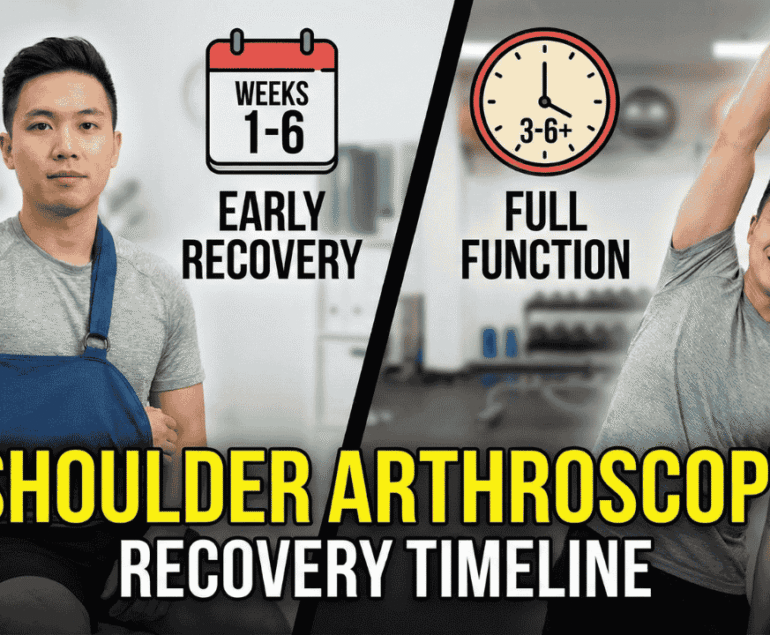
- Day 1: You go home. You might need crutches or a brace.
- Week 1: You can do simple exercises.
- Week 2-4: The small cuts heal completely.
- PT (Physical Therapy): This is the most important part! You must do exercises to make your muscles strong again.
Check out our Fellowship in Physiotherapy to see how experts help patients recover.
Why Choose Arthroscopy College?
At Arthroscopy College, we don’t just teach—we create experts. Led by Dr. Manu Bora, we use the world’s best technology like “All-Inside ACL Reconstruction” with Fiber Tape.
If you are a student or doctor looking to learn, check our Fellowship Details.
If you are a patient looking for the best treatment, you are in the right place.
Need Help? Talk to Us Now!
Do you have knee pain or an MRI report? Don’t wait. Get a Free Expert Opinion from Dr. Manu Bora’s team today.
- 📞 Call Us: 919310138022
- 💬 Chat on WhatsApp for Free Opinion
- 📸 See Our Success Stories
Frequently Asked Questions (FAQs)
1. Is arthroscopy painful?
Very little. Because the cuts are tiny, most people feel very little pain compared to big surgeries. You get medicine to stop the pain during the operation.
2. Can I walk after knee arthroscopy?
Yes! Most patients can walk on the same day with crutches. With Dr. Manu Bora’s advanced techniques, some patients walk without pain very quickly.
3. How long does the surgery take?
It usually takes between 30 minutes to 1 hour, depending on what needs to be fixed.
4. What is the cost of arthroscopy?
The cost depends on the injury. It is best to Chat on WhatsApp to send your MRI and get an exact quote.
5. Is it safe for kids?
Yes, arthroscopy is safe for children and teenagers who have sports injuries.