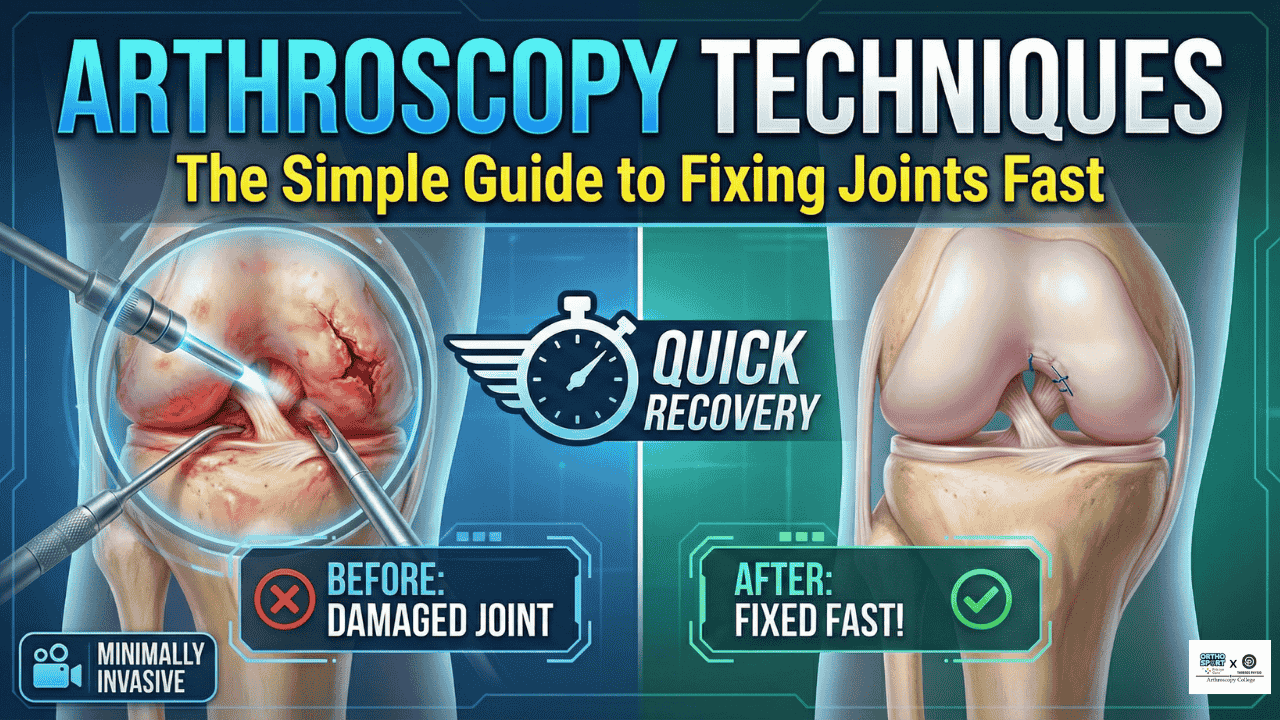
Arthroscopy Techniques: The Simple Guide to Fixing Joints Fast

Are you or a loved one dealing with knee pain that just won’t go away? Maybe your shoulder clicks every time you lift your arm? You might have heard your doctor say a big, scary word: Arthroscopy.

Don’t worry! It sounds complicated, but it is actually a superhero way to fix joints without making big cuts. Imagine fixing a ship inside a bottle that is exactly what Arthroscopy is!

At Arthroscopy College, led by the expert Dr. Manu Bora, we specialize in the most advanced versions of this surgery. We want to get you back to running, playing sports, or just walking pain-free as soon as possible.In this guide, we will break down everything you need to know about arthroscopy techniques in simple words. No confusing medical talk just the facts you need.

What is Arthroscopy? (The “Keyhole” Magic)

Arthroscopy (say it like Ar-thros-copy) is a procedure for diagnosing and treating joint problems.

Think of it like this:

  • “Arthro” means Joint.
  • “Scopy” means to Look.

So, it literally means “to look inside the joint.”

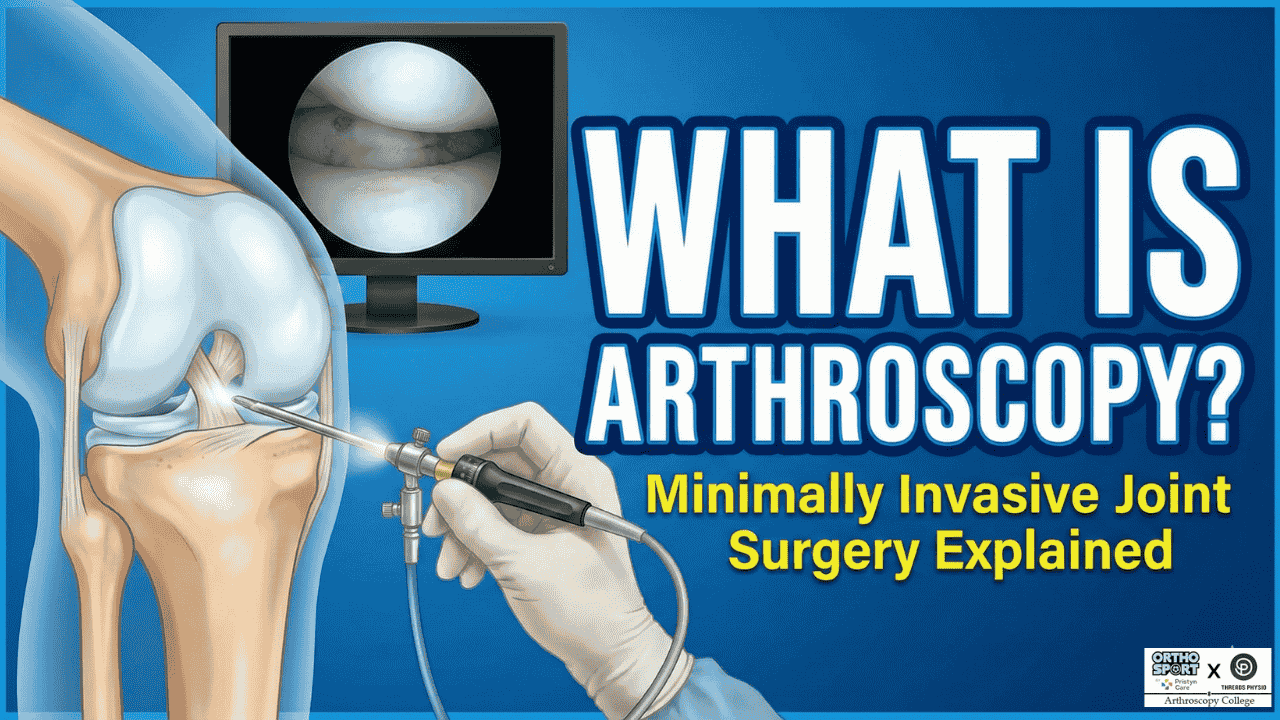
In the old days, doctors had to cut your knee wide open to see what was wrong. Ouch! Today, using arthroscopy techniques, doctors make a tiny cut about the size of a buttonhole. They insert a tiny camera called an Arthroscope. This camera sends live video to a TV screen, letting the doctor see inside your body and fix the problem using tiny tools.

Why is this better?

  • Less Pain: Smaller cuts mean less hurting.
  • Faster Healing: You go home the same day or the next day!
  • Tiny Scars: Almost invisible marks.

Why Do You Need Arthroscopy?

Your joints are like the hinges on a door. Over time, or because of a sports injury, these hinges can get rusty or broken. You might need arthroscopy if you have:

  • Loose Bone Fragments: Tiny pieces of bone floating in your knee or elbow.
  • Torn Ligaments: Like the famous ACL tear in the knee (common in footballers!).
  • Damaged Cartilage: The soft cushion between bones wears out.
  • Inflammation: The lining of your joint gets swollen and angry.

Did You Know? Dr. Manu Bora uses special Fellowship-level techniques to fix these issues without opening the whole joint!

Common Types of Arthroscopy Techniques

Arthroscopy isn’t just for knees. It can be used all over the body!

1. Knee Arthroscopy (The Most Common)

This is used mostly for ACL Injuries and Meniscus Tears.

  • ACL Reconstruction: Fixing the main stabilizer of the knee.
  • Meniscus Repair: Sewing up the torn cushion in your knee.

Watch Dr. Manu Bora Explain Advanced ACL Surgery

2. Shoulder Arthroscopy

Used for Rotator Cuff Tears or Dislocated Shoulders.

  • If you can’t lift your arm without pain, this might be for you.
  • We fix the tendons so your shoulder stays in its socket.

3. Hip, Ankle, and Wrist Arthroscopy

These are less common but super effective for deep pain that X-rays might miss.

The Procedure: Step-by-Step (What Happens?)

If you are getting surgery at Arthroscopy College, here is exactly what happens. It is not as scary as you think!

  1. Anesthesia: You will be given medicine so you don’t feel any pain. You might be asleep or just numb.
  2. The Portal (The Tiny Cut): The surgeon makes a small cut (about 4mm to 5mm).
  3. Insert the Camera: The arthroscope goes in. Saline water is pumped in to expand the joint so the doctor can see clearly.
  4. The Fix: Using another tiny cut, the surgeon inserts special tools (like mini scissors or shavers) to repair the damage.
  5. Closure: The cuts are so small they often need just one stitch or a simple bandage!

Advanced Techniques: Why Dr. Manu Bora is Different

This is the most important part. Not all arthroscopy is the same. Dr. Manu Bora uses Next-Gen 2026 Techniques that many other doctors don’t use yet.

1. All-Inside ACL Reconstruction with Fiber Tape Internal Brace

This is a game-changer.

  • Traditional Surgery: Uses screws that can hurt later. Recovery takes months.
  • Dr. Bora’s Technique: Uses a “Fiber Tape” (like a seatbelt for your ligament).
    • Result: You can walk without support the very next day!
    • Pain: Much less than traditional screws.
    • Return to Sports: Faster and safer.

2. Knotless Suture Anchors

In shoulder surgery, old techniques used big knots that could irritate your skin. We use knotless anchors that bury into the bone, leaving a smooth surface.

Check out our Gallery to see real success stories!

Recovery: How Fast Can I Move?

Because arthroscopy techniques are minimally invasive, recovery is super fast.

  • Day 1: You can usually stand and walk (with our Internal Brace technique).
  • Week 1: Basic exercises begin.
  • Month 1-3: You are back to light jogging and gym work.
  • Month 6: Most athletes return to professional sports!

We also offer specialized Fellowships in Physiotherapy to ensure our rehab protocols are world-class.

Risks and Complications (Being Honest)

Every surgery has some risk, but with arthroscopy, they are very low.

  • Infection: Rare (less than 1%).
  • Blood Clots: We give you meds to prevent this.
  • Swelling: Normal for a few days.

Note: Choosing an experienced surgeon like Dr. Manu Bora drastically reduces these risks.

Frequently Asked Questions (People Also Ask)

Q: Is arthroscopy painful?
A: Most patients report very little pain compared to open surgery. You might feel soreness for a few days, which is easily managed with medicine.

Q: Can I walk immediately after ACL surgery?
A: Yes! With Dr. Manu Bora’s Internal Brace technique, most patients walk without crutches within 24 hours.

Q: How much does it cost?
A: It depends on the specific injury. However, arthroscopy is often cheaper in the long run because you spend less time in the hospital and get back to work faster.

Q: Do you offer training for doctors?
A: Yes! We run a premier Fellowship Program where we teach these advanced skills to other surgeons.

Conclusion: Ready to Live Pain-Free?

You don’t have to live with joint pain. Modern arthroscopy techniques have made fixing knees and shoulders easier, faster, and safer than ever before.

At Arthroscopy College, we combine cutting-edge technology (like the Fiber Tape Internal Brace) with compassionate care to get you back on your feet.

Don’t wait until it gets worse.
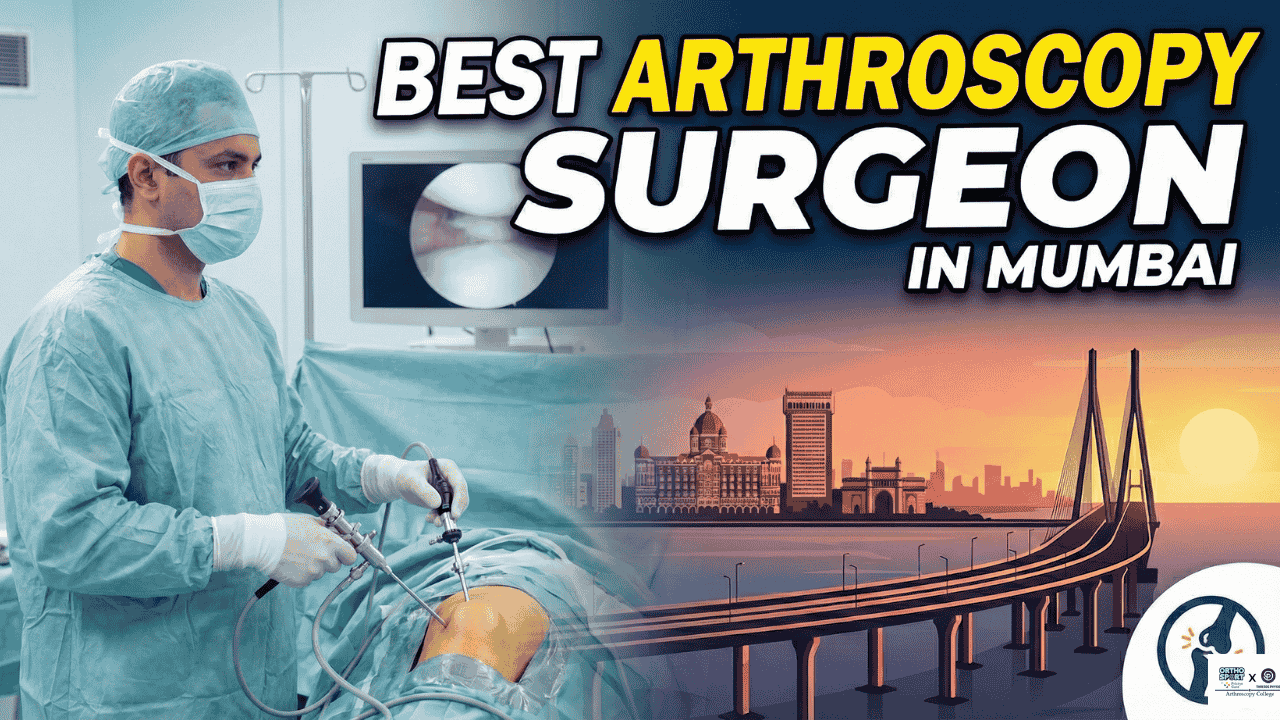
Best Arthroscopy Surgeon in Mumbai

Are you living in Mumbai and struggling with knee pain, shoulder pain, or a sports injury?

You are not alone. In the “City of Dreams,” no one has time to stop. From catching a fast local at Dadar to jogging on Marine Drive or playing cricket at Azad Maidan—Mumbaikars are always on the move. But joint pain can bring your fast life to a sudden halt.

You might be searching for the best arthroscopy surgeon in Mumbai to help you get back on track. You need a doctor who understands that “time is money” and uses the world’s best technology to get you walking again instantly.

Meet Dr. Manu Bora. He is a world-class expert helping patients from South Mumbai to the suburbs get back to their active lives without long rest.

What is Arthroscopy? (Keyhole Surgery)

Think of your knee or shoulder like a complex machine. Sometimes, a small part inside breaks, like a wire (ligament) or a washer (meniscus).

In the past, doctors had to make a large cut (open surgery) to fix it. This was painful and required months of bed rest.

Arthroscopy is the modern solution. It is also called “Keyhole Surgery.”

  • Tiny Hole: The doctor makes a cut as small as a button.
  • Camera: A small camera goes inside to show the problem on a screen.
  • Precision: Tiny tools fix the damage without hurting healthy tissue.

Why is this better for Mumbaikars?

  • Less Pain: Minimal cutting means minimal pain.
  • No Big Scars: Cosmetic-friendly.

Fast Healing: Critical for those who cannot afford to take long leaves from work.

Why Choose Dr. Manu Bora for Arthroscopy in Mumbai?

Mumbai has many doctors, but Dr. Manu Bora offers something unique. He is a super-specialist known for advanced techniques that many standard hospitals have not yet adopted.

1. The “Internal Brace” Technology (The Game Changer)

Standard surgery often uses simple screws that take months to heal. Dr. Manu Bora uses the Fiber Tape Internal Brace.

  • It acts like a “seatbelt” for your repaired ligament.
  • It provides instant strength to the joint.
  • Benefit: You don’t have to wait for months to put weight on your leg.

2. Walk the Next Day

This is our biggest promise. With the Internal Brace, most patients walk without support the very next day after surgery.

  • No crutches.
  • No weeks in bed.
  • Mumbai Reality: Get back to your local train or car commute in record time.

3. 100% Painless Treatment

Fear of pain keeps many people away from surgery. Dr. Bora uses an “All-Inside” technique that is so gentle, patients are often surprised when the surgery is over.

4. Trusted by Pro Athletes

Dr. Manu Bora is a Sports Injury Expert. He treats professional wrestlers, cricketers, and runners. If he can fix an athlete who needs to perform at the highest level, he can certainly fix your knee or shoulder.

Services We Offer for Mumbai Patients

We provide specialized care for all major joint issues:

1. ACL Reconstruction (Knee Ligament)

The ACL is crucial for stability. If it tears, your knee gives way. We fix it using the Internal Brace for maximum strength.

2. Meniscus Repair

The meniscus is your knee’s shock absorber. A tear causes sharp pain. We stitch it back together to save your natural cushion.

3. Shoulder Arthroscopy

Suffering from a frozen shoulder, dislocation, or rotator cuff tear? We fix these permanently so you can lift your arm pain-free.

4. PCL & Multi-Ligament Surgery

For severe injuries (like bike accidents common in Mumbai traffic), Dr. Bora is an expert in complex multi-ligament restoration.

Cost of Arthroscopy Surgery in Mumbai

Healthcare in Mumbai can be very expensive.

  • Standard Mumbai Hospitals: Often charge high premiums for room rent and standard surgeries that still require long rehab.
  • Dr. Manu Bora: Offers Advanced Internal Brace Surgery that provides superior value.

The “Hidden” Cost of Cheap Surgery: If you save a small amount on surgery but lose 3 months of salary because you are stuck in bed, you actually lose money. With Dr. Bora, you return to work in days. This saves your income and your precious time.

  • Consultation: We offer free online opinions for Mumbai patients.
  • Transparency: Honest pricing with no hidden surprises.

The Process: Seamless for Mumbai Residents

You don’t need to fight traffic just for a consultation. We have streamlined the process for you.

  1. Step 1: Send Your MRI Have an MRI report? WhatsApp it to us. Dr. Manu Bora will review it personally.
  2. Step 2: Free Expert Call We will discuss your report over the phone. We explain the problem and the solution in simple words.
  3. Step 3: The Procedure You travel only for the main procedure. It is quick, efficient, and you will be walking the next day.
  4. Step 4: Back to Mumbai Return home with a fixed joint and a rehab plan that fits your lifestyle.

Frequently Asked Questions (FAQs)

Q1: Is arthroscopy safe?
A: Yes! It is minimally invasive with a very low risk of infection or complications compared to open surgery.

Q2: I live in Mumbai (Andheri/Bandra/Dadar). Do I need to travel for a consultation?
A: No! In a city with traffic like Mumbai, we value your time. Send us your MRI on WhatsApp for a free remote consultation first.

Q3: How fast can I travel back to Mumbai after surgery?
A: Since you walk the next day, most patients are fit to travel back comfortably within 2-3 days post-surgery.

Q4: Will I need physiotherapy?
A: Yes, but it is easy. We provide a guided plan that you can do at home or with a local physio in Mumbai.

Q5: Can I claim cashless insurance?
A: Yes, arthroscopy is a standard medical procedure covered by most health insurance, including corporate policies common in Mumbai.

Ready to Run Again?

Don’t let pain dictate your life. Whether you want to catch the fast local or play sports on weekends, you deserve a strong body.

Get the Best Treatment for Your Joints Today.

Dr. Manu Bora Director, Arthroscopy College Expert in ACL, Meniscus & Sports Injuries

Left Knee Arthroscopy

Does your left knee hurt when you walk? Does it feel like something is “stuck” inside, or maybe it clicks and pops? If medicine and rest aren’t helping, you might need a simple treatment called left knee arthroscopy.

Don’t worry! It sounds like a big, scary word, but it is actually very simple.

Think of it as “keyhole” surgery. Doctors don’t need to make a big cut on your knee. Instead, they make tiny holes as small as a button!

At Arthroscopy College, we use a special method that is different from others. While other doctors might tell you to rest in bed for weeks, our patients often walk the very next day.

Let’s learn everything about fixing your left knee!

What Is Left Knee Arthroscopy?

(And Why Is It Called “Keyhole” Surgery?)

Imagine you want to see inside a dark room, but you don’t want to break down the door. What do you do? You peek through the keyhole!

Left knee arthroscopy works the same way.

  • Arthro means “Joint” (your knee).
  • Scopy means “To look.”

The doctor puts a tiny camera (called an Arthroscope) inside your left knee through a small cut. This camera shows the inside of your knee on a TV screen like a movie. Then, the doctor uses tiny tools to fix the problem.

Why is this better than old surgery?

  • Tiny Cuts: No big scars.
  • Less Pain: You feel much better.

Fast Healing: You go home quickly.

Understanding Your Knee (Simple Anatomy)

Your knee is like a machine with many moving parts. To understand why it hurts, we need to know what’s inside.

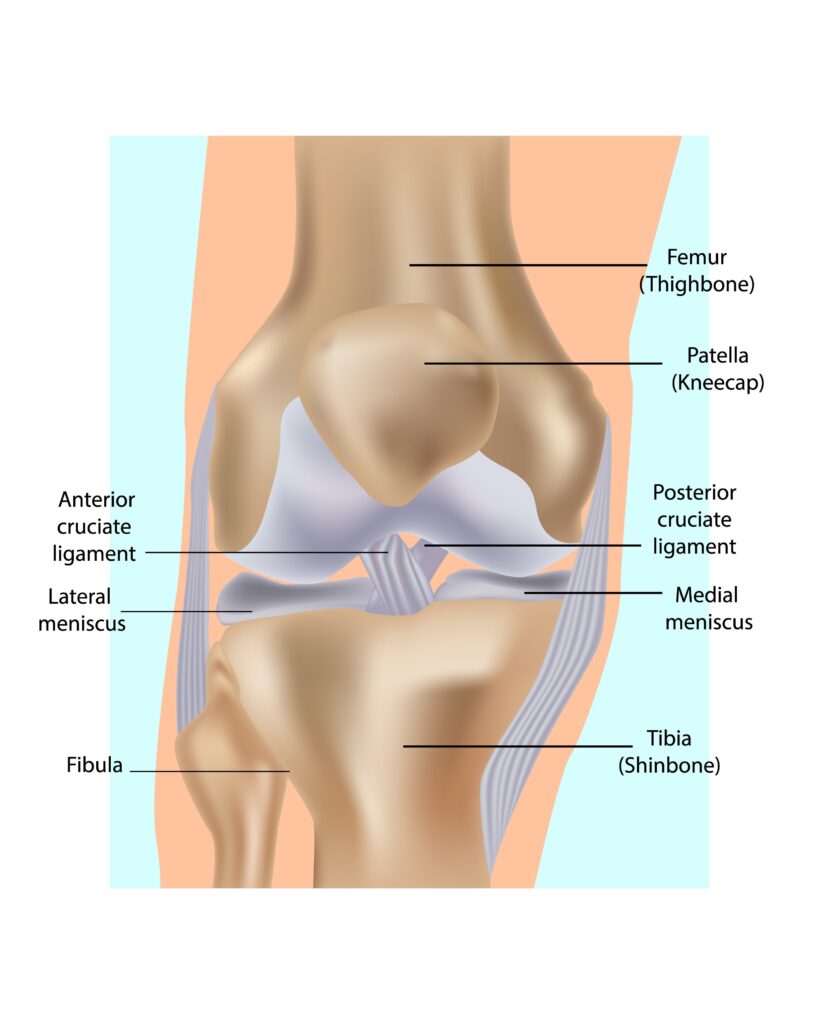
  1. Bones: The thigh bone (femur) meets the shin bone (tibia).
  2. The Cushion (Meniscus): There are two rubbery wedges between the bones. They act like shock absorbers when you jump or run.
  3. The Ropes (Ligaments): These hold your knee steady. The most famous one is the ACL (Anterior Cruciate Ligament).
  4. The Slippery Coating (Cartilage): This helps bones glide smoothly.

When any of these parts break in your left knee, it causes pain. That is when we use arthroscopy to peek inside and fix it.

Why Do You Need This Surgery? (Common Problems)

You might need left knee arthroscopy if you have:

  • Torn Meniscus: The “cushion” in your knee is ripped.
  • ACL Tear: The “rope” that holds your knee steady is broken.
  • Loose Bones: Tiny pieces of bone floating inside (ouch!).
  • Swollen Lining: The inside of the knee is red and angry (inflamed).
  • Kneecap Problems: Your kneecap isn’t sitting in the right spot.

If your left knee hurts and medicine isn’t helping, this surgery can fix it. Our expert, Dr. Manu Bora, has fixed thousands of knees for athletes and regular people just like you.

The “Internal Brace” Secret: Why We Are Different

This is the most important part.

Most doctors use old methods with metal screws. After that surgery, you might have to use crutches (sticks to help you walk) for weeks. You might have to stay in bed.

But at Arthroscopy College, Dr. Manu Bora uses a special technology called the Fiber Tape Internal Brace.

What is the Internal Brace?

Think of it like a seatbelt for your knee. When doctors fix your ligament (the rope in your knee), they add this extra “seatbelt.” It protects the repair so strongly that you can walk immediately.

  • Old Method: Bed rest for weeks. Painful rehab.
  • Our Method: Walk the next day. Go back to work/school in 3-5 days.

See the difference for yourself! Check out our Gallery to see happy patients walking.

How to Get Ready for Surgery (Preparation)

Getting ready is easy. Here is a simple checklist:

  1. Stop Medicine: Your doctor might ask you to stop taking blood-thinning pills a week before.
  2. Don’t Eat: Usually, you cannot eat or drink for 6 to 12 hours before the surgery.
  3. Bring a Friend: You will need someone to take you home (though you will be walking, it’s good to have help!).
  4. Wear Loose Clothes: Shorts or loose pants are best.

Step-by-Step: What Happens During the Surgery?

Here is exactly what happens when you come to the hospital for your left knee arthroscopy:

1. Sleepy Medicine (Anesthesia)

The doctor gives you medicine so you don’t feel any pain. You might be asleep, or just your legs will be numb.

2. The Tiny Cuts

The doctor makes 2 or 3 small holes (portals) in your left knee.

3. The Water

They fill your knee with sterile water. This expands the knee like a balloon so they can see clearly.

4. The Camera

The tiny camera goes in. The doctor looks at the screen to find the tear or loose bone.

5. The Fix

Using tiny tools, the doctor repairs the tear, trims the bad tissue, or adds the Internal Brace.

6. Done!

The water is drained, and a small bandage is put on. No big stitches are needed!

Recovery: When Can You Walk Again?

If you choose the Internal Brace method with Dr. Manu Bora, the recovery is super fast!

  • Day 1 (Surgery Day): You can stand and walk with a walker or stick.
  • Day 2: You can often walk without support.
  • Week 1: You can go to the office or school (if you don’t have to run).
  • Month 1-2: You can start light jogging.

We also have a special program called a Fellowship in Physiotherapy where experts help you get strong again fast.

Exercises to Make Your Knee Strong

After surgery, you need to move! Here are 3 simple exercises (ask your doctor first!):

  1. Ankle Pumps: Move your foot up and down like you are pressing a gas pedal. Do this lying in bed.
  2. Leg Lifts: Lie on your back. Keep your leg straight and lift it up to the ceiling. Hold for 5 seconds.
  3. Knee Bends: Sit on a chair. Slowly straighten your leg, then bend it back.

Risks vs. Benefits: Is It Safe?

Every surgery has some risks, but left knee arthroscopy is one of the safest surgeries in the world.

The Benefits (Good Stuff):

  • Less Pain: You won’t hurt as much as open surgery.
  • Low Risk: Infections are very rare.
  • Quick Life: Get back to playing and working fast.

The Risks (Rare Bad Stuff):

  • Swelling: Your knee might look puffy for a few days.
  • Stiffness: It might feel tight.
  • Infection: This happens to less than 1 in 100 people.

To stay safe, always choose an expert surgeon. Dr. Manu Bora also teaches other doctors how to do this surgery through his Fellowship Details program. If he teaches others, you know he is an expert!

Cost of Left Knee Arthroscopy in India

Many people think this advanced surgery is very expensive. But it is actually very affordable compared to the USA or Europe.

The cost depends on:

  1. The Hospital: Some are fancy, some are basic.
  2. The Implant: Using the Fiber Tape Internal Brace (the best quality) might cost a little more, but it saves you months of lost work.
  3. Insurance: Most health insurance plans cover this surgery!

Don’t guess the price. Call us to get an exact quote for your knee.

📞 Call Us Now: +91 93101 38022

People Also Ask (FAQs)

Q: Is left knee arthroscopy painful?
A: Very little! Because we use the “All-Inside” technique and tiny cuts, most patients say the pain is very low.

Q: Can I walk the next day?
A: Yes! If you get the Internal Brace surgery with Dr. Manu Bora, you can usually walk the next day without pain.

Q: How long does the surgery take?
A: It is very fast. Usually, it takes between 30 minutes to 1 hour.

Q: Do I need to stay in the hospital?
A: Usually just for 1 day. You come in the morning and can often go home the next morning.

Q: Will the scar be big?
A: No. The scars are tiny dots that fade away with time.

Ready to Fix Your Knee?

Don’t live with pain. You deserve to run, jump, and walk freely. Dr. Manu Bora and the team at Arthroscopy College are here to help you get back on your feet—literally the next day!

Take the first step today:

Right Knee Arthroscopy: The Simple Guide to Fixing Your Knee (Pain-Free!)

Does your right knee hurt when you walk? Does it feel like something is “stuck” inside? You might need a simple treatment called right knee arthroscopy.

Don’t worry! It sounds like a big, scary word, but it is actually very simple. Think of it as a “keyhole” surgery. Doctors don’t need to make a big cut on your knee. Instead, they make tiny holes—as small as a button!

At Arthroscopy College, we use a special method that is different from others. While other doctors might tell you to rest in bed for weeks, our patients often walk the very next day.

Let’s learn everything about fixing your right knee!

What Is Right Knee Arthroscopy?

(And Why Is It Called “Keyhole” Surgery?)

Imagine you want to see inside a dark room, but you don’t want to break down the door. What do you do? You peek through the keyhole!

Right knee arthroscopy works the same way.

  • Arthro means “Joint” (your knee).
  • Scopy means “To look.”

The doctor puts a tiny camera (called an Arthroscope) inside your knee through a small cut. This camera shows the inside of your knee on a TV screen like a movie. Then, the doctor uses tiny tools to fix the problem.

Why is this better than old surgery?

  • Tiny Cuts: No big scars.
  • Less Pain: You feel much better.
  • Fast Healing: You go home quickly.

Why Do You Need This Surgery? (Common Problems)

Your knee is like a machine with many moving parts. Sometimes, these parts break. You might need right knee arthroscopy if you have:

  • Torn Meniscus: The “cushion” in your knee is ripped.
  • ACL Tear: The “rope” that holds your knee steady is broken.
  • Loose Bones: Tiny pieces of bone floating inside (ouch!).
  • Swollen Lining: The inside of the knee is red and angry.

If your right knee hurts and medicine isn’t helping, this surgery can fix it. Our expert, Dr. Manu Bora, has fixed thousands of knees for athletes and regular people just like you.

The “Internal Brace” Secret: Why We Are Different

This is the most important part.

Most doctors use old methods with metal screws. After that surgery, you might have to use crutches (sticks to help you walk) for weeks. You might have to stay in bed.

But at Arthroscopy College, Dr. Manu Bora uses a special technology called the Fiber Tape Internal Brace.

What is the Internal Brace? Think of it like a seatbelt for your knee. When doctors fix your ligament (the rope in your knee), they add this extra “seatbelt.” It protects the repair so strongly that you can walk immediately.

  • Old Method: Bed rest for weeks. Painful rehab.
  • Our Method: Walk the next day. Go back to work/school in 3-5 days.

How to Get Ready for Surgery (Preparation)

Getting ready is easy. Here is a simple checklist:

  1. Stop Medicine: Your doctor might ask you to stop taking blood-thinning pills.
  2. Don’t Eat: Usually, you cannot eat or drink for 6 to 12 hours before the surgery.
  3. Bring a Friend: You will need someone to take you home (though you will be walking, it’s good to have help!).
  4. Wear Loose Clothes: Shorts or loose pants are best.

Step-by-Step: What Happens During the Surgery?

Here is exactly what happens when you come to the hospital:

  1. Sleepy Medicine (Anesthesia): The doctor gives you medicine so you don’t feel any pain. You might be asleep, or just your legs will be numb.
  2. The Tiny Cuts: The doctor makes 2 or 3 small holes in your right knee.
  3. The Water: They fill your knee with sterile water. This expands the knee like a balloon so they can see clearly.
  4. The Camera: The tiny camera goes in. The doctor looks at the screen.
  5. The Fix: Using tiny tools, the doctor repairs the tear or removes the bad tissue.
  6. Done! The water is drained, and a small bandage is put on. No big stitches are needed!

Recovery: When Can You Walk Again?

If you choose the Internal Brace method with Dr. Manu Bora, the recovery is super fast!

  • Day 1 (Surgery Day): You can stand and walk with a walker or stick.
  • Day 2: You can often walk without support.
  • Week 1: You can go to the office or school (if you don’t have to run).
  • Month 1-2: You can start light jogging.

We also have a special program called a Fellowship in Physiotherapy where experts help you get strong again fast.Need a Free Opinion? Send us your MRI report on WhatsApp! Chat on WhatsApp Now

Risks vs. Benefits: Is It Safe?

Every surgery has some risks, but right knee arthroscopy is one of the safest surgeries in the world.

The Benefits (Good Stuff):

  • Less Pain: You won’t hurt as much as open surgery.
  • Low Risk: Infections are very rare.
  • Quick Life: Get back to playing and working fast.

The Risks (Rare Bad Stuff):

  • Swelling: Your knee might look puffy for a few days.
  • Stiffness: It might feel tight.
  • Infection: This happens to less than 1 in 100 people.

To stay safe, always choose an expert surgeon. Dr. Manu Bora also teaches other doctors how to do this surgery through his Fellowship Details program. If he teaches others, you know he is an expert!

Cost of Right Knee Arthroscopy in India

Many people think this advanced surgery is very expensive. But it is actually very affordable compared to the USA or Europe.

The cost depends on:

  1. The Hospital: Some are fancy, some are basic.
  2. The Implant: Using the Fiber Tape Internal Brace (the best quality) might cost a little more, but it saves you months of lost work.

Insurance: Most health insurance plans cover this surgery!

Don’t guess the price. Call us to get an exact quote for your knee. Call Us Now: +91 93101 38022

Exercises to Make Your Knee Strong

After surgery, you need to move! Here are 3 simple exercises (ask your doctor first!):

  1. Ankle Pumps: Move your foot up and down like you are pressing a gas pedal. Do this lying in bed.
  2. Leg Lifts: Lie on your back. Keep your leg straight and lift it up to the ceiling. Hold for 5 seconds.
  3. Knee Bends: Sit on a chair. Slowly straighten your leg, then bend it back.

For the best plan, check our Fellowship in Physiotherapy page to see how we train experts to help you.

People Also Ask (FAQs)

Q: Is right knee arthroscopy painful?
A: Very little! Because we use the “All-Inside” technique and tiny cuts, most patients say the pain is very low.

Q: Can I walk the next day?
A: Yes! If you get the Internal Brace surgery with Dr. Manu Bora, you can usually walk the next day without pain.

Q: How long does the surgery take?
A: It is very fast. Usually, it takes between 30 minutes to 1 hour.

Q: Do I need to stay in the hospital? A: Usually just for 1 day. You come in the morning and can often go home the next morning.

Q: Will the scar be big? A: No. The scars are tiny dots that fade away with time.

Ready to Fix Your Knee?

Don’t live with pain. You deserve to run, jump, and walk freely. Dr. Manu Bora and the team at Arthroscopy College are here to help you get back on your feet—literally the next day!

Take the first step today:

What Is Arthroscopy?

Have you ever wondered how doctors fix a knee or shoulder problem without making a huge cut? The answer is a super-cool technology called arthroscopy.

If your doctor mentioned this word and you are feeling a bit nervous or confused, don’t worry! We are going to explain it simply just like we would explain it to a 5th grader. By the end of this guide, you will know exactly what is happening inside your joint.At Arthroscopy College, we believe understanding your body is the first step to healing. Let’s dive in!

What Is Arthroscopy? (The Simple Definition)

Let’s start with the basics. The arthroscopy definition is actually hidden in the name itself. It comes from two Greek words:

  • “Arthro” means joint (like your knee or shoulder).
  • “Scopy” means to look.

So, put them together, and arthroscopy simply means “to look inside a joint.”

It is a procedure where a doctor uses a tiny camera to peek inside your body. Instead of cutting the skin wide open like in old-fashioned surgeries, they only make a tiny hole—about the size of a buttonhole. Because the cuts are so small, many people call it “keyhole surgery” or minimally invasive surgery.

Think of it like this: If you lost a toy under the sofa, you wouldn’t cut the whole sofa open to find it, right? You would shine a flashlight and use a stick to get it out. Arthroscopy is exactly like that for your joints!

How Does Arthroscopy Work? (The “Camera” Magic)

Okay, so how do they actually see inside?

Surgeons use a special tool called an arthroscope. This is a long, thin tube (about the width of a pencil) with a tiny camera and light on the end.

Here is the magic trick:

  1. The camera sends live video to a TV screen in the operating room.
  2. The doctor watches the TV screen to see inside your knee, shoulder, or ankle in high definition.
  3. Because the camera magnifies everything (makes it look bigger), the doctor can see cartilage tears or damage much better than they could with just their naked eyes.

The “Dime” Size Difference

In normal surgery, a doctor might make a cut that is 3 or 4 inches long. In arthroscopy, the cut is tiny—about the size of a dime. This is why it hurts less and heals so much faster!

Types of Arthroscopy: Which Joints Can We Fix?

Doctors can use this camera trick on almost any big joint in your body. The knee arthroscopy definition is simply using this camera specifically for the knee joint, which is the most common one.

Here are the main joints doctors can fix:

  • Knee: For torn ligaments (like the ACL) or meniscus tears.
  • Shoulder: For rotator cuff tears or if your shoulder keeps popping out.
  • Ankle: For pain after a sprain or loose bone chips.
  • Hip: For hip pain that won’t go away.
  • Elbow: For tennis elbow or stiffness.

Wrist: For carpal tunnel or wrist pain.

Arthroscopy vs. Open Surgery: Why “Small” Is Better

If you look up the arthroscopy medical definition, you will see doctors love it because it is “minimally invasive.” But what does that mean for you?

Comparing Arthroscopy to Open Surgery is like comparing a scratch to a big cut.

FeatureOpen Surgery (Old Way)Arthroscopy (New Way)
Cut SizeBig (inches long)Tiny (buttonhole size)
PainMore painLess pain
Hospital StayOften stay overnightGo home the same day
RecoveryMonthsWeeks
ScarsLarge scarTiny, barely visible dots

Because the doctor doesn’t have to cut through a lot of muscle to get to the joint, your body stays stronger.

Preparing for Your Surgery: Getting Ready

Even though it is a small surgery, it is still surgery! Here is how you get ready:

  • No Eating: Your stomach usually needs to be empty. Your doctor will tell you when to stop eating (usually the night before).
  • Medications: You might need to stop taking certain medicines that thin your blood.
  • The Ride Home: You cannot drive after surgery because of the anesthesia (sleeping medicine). Make sure a friend or family member is there to drive you!

What Happens During the Surgery? (Step-by-Step)

This is the cool part. If you were awake (though you usually aren’t!), here is what you would see happening in the operating room:

  1. Sleepy Time: You get anesthesia so you don’t feel anything. You might be totally asleep (General) or just numb from the waist down (Local/Regional).
  2. The Tiny Cut: The surgeon makes a small incision (less than half an inch).
  3. Water Works: The doctor pumps sterile salt water (saline) into your joint. This expands the joint like a balloon, giving the camera plenty of room to see.
  4. Action!: The camera goes in. The doctor looks at the TV screen to find the problem.
  5. The Fix: If they find a tear, they make another tiny hole to insert small tools—like miniature scissors or shavers—to fix it.
  6. Closing Up: The water is drained, and the tiny cuts are closed with a stitch or special tape. Bandages go on, and you are done!

Recovery: Getting Back to Action

The best part about arthroscopy is how fast you get back to your life.

  • Going Home: Most people go home the same day.
  • R.I.C.E Method: To stop swelling, remember Rest, Ice, Compression (bandage), and Elevation (prop it up on pillows).
  • Crutches: If it was your knee or ankle, you might need crutches for a few days.
  • Physical Therapy: This is super important! You will do special exercises to make your muscles strong again.

Check out our Fellowship in Physiotherapy to see how experts learn to help patients recover!

Are There Risks? (Is It Safe?)

Arthroscopy is very safe, but like any surgery, there are small risks. These are rare (they don’t happen often):

  • Infection: Bacteria getting into the cut.
  • Blood Clots: Thick blood in the leg veins.
  • Swelling: Sometimes the joint stays puffy for a while.

Your doctor will give you instructions to prevent all of these!

Why Choose Arthroscopy College?

At Arthroscopy College, led by Dr. Manu Bora, we specialize in the most advanced, high-tech treatments. Whether you are a patient looking for relief or a student looking for a Fellowship in Arthroscopy, we are the leaders in the field.

We don’t just fix joints; we help you get your life back.

Ready to Fix Your Pain?

Call Us Now: 919310138022

People Also Ask (FAQs)

Q: Is arthroscopy painful?

A: It is much less painful than regular surgery. You will feel some soreness for a few days, but medicine and ice help a lot.

Q: Can I walk after knee arthroscopy?

A: Often, yes! Many patients can walk (sometimes with crutches) the same day. But always listen to your doctor.

Q: How long does the surgery take?

A: Usually between 30 minutes and 2 hours, depending on what needs to be fixed.

Q: What is the main purpose of arthroscopy?

A: To diagnose (find) and treat (fix) joint problems using a camera without making large cuts.